Control the light coming straight down
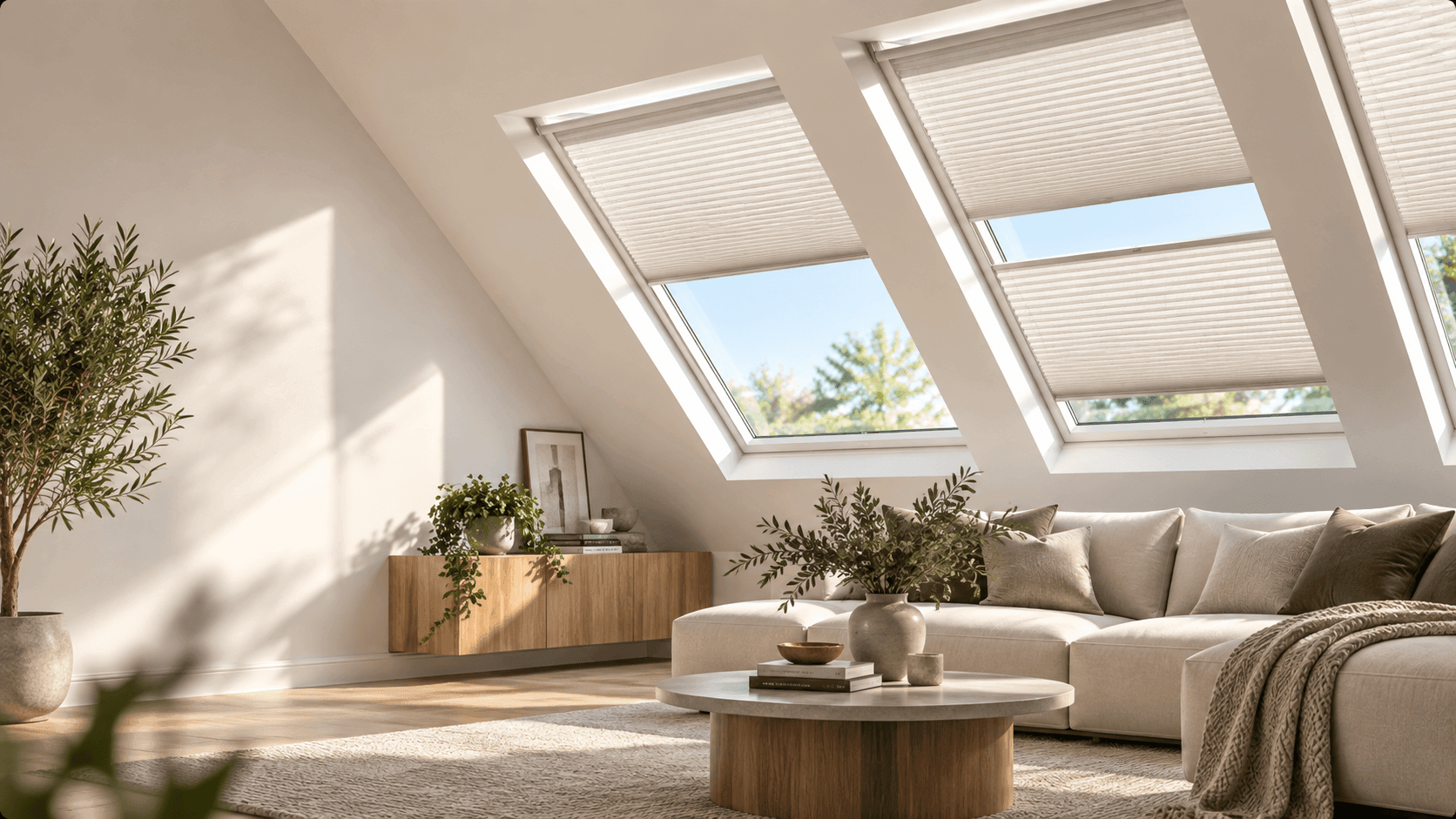
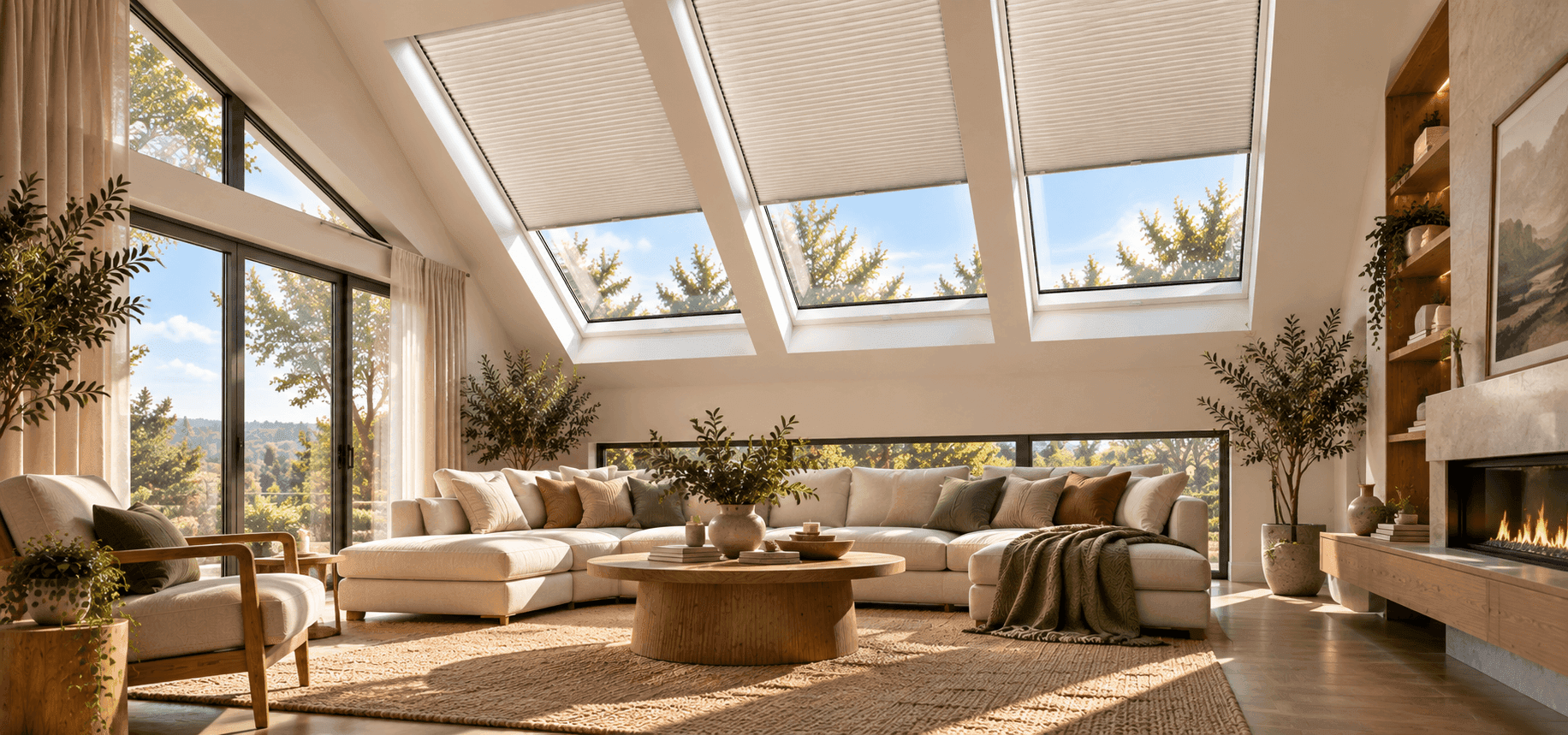
Built to fit and hold at any tilt, from a flat skylight to a steep vaulted roof window. Pleated or venetian fabric, operated by crank pole or motor, for the one window standard blinds can’t reach.
A standard blind falls. This one stays.
A skylight blind mounts into guide rails on both sides of the frame, so the fabric holds flat at any pitch instead of sliding under its own weight. That single difference is why a standard roller or Roman blind can’t simply be tilted onto a roof window.

Direct overhead sun, tamed
Light hitting straight down is harsher than a side window’s — pleated fabric cuts the glare without losing the room’s brightness.

Less solar heat through the roof
A reflective or blackout-backed fabric blocks a meaningful share of the summer heat that a bare skylight lets straight through.

Made to hold at any pitch
Choose your fabric
Three quick choices below. They are not an order — they tell your designer exactly which samples to bring, so the consultation starts where you left off instead of at the beginning.
Step 1 of 3 — Fabric
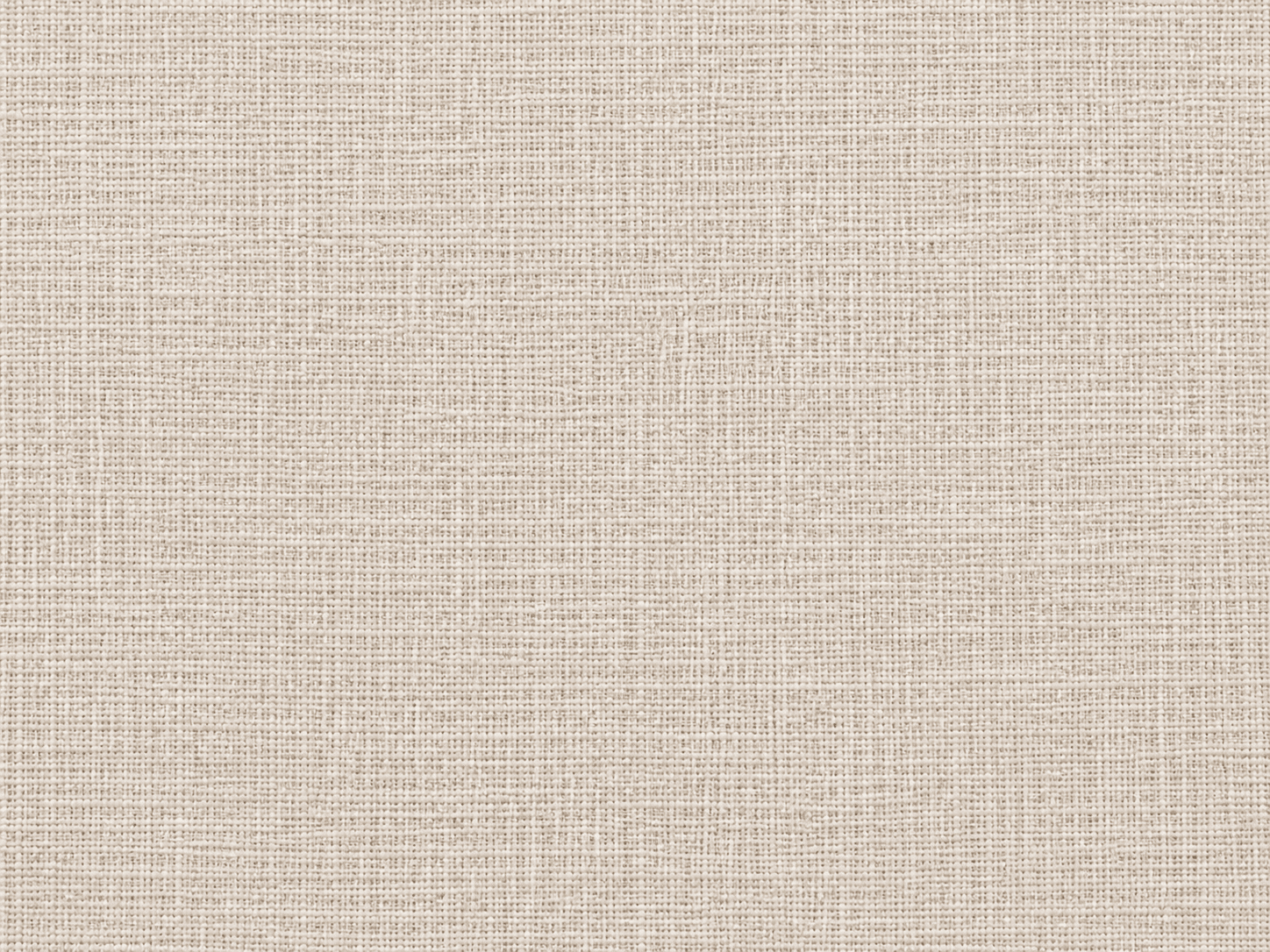
A tightly pleated neutral that softens overhead glare while keeping the room bright.
Eight of our thirty-plus skylight fabrics are shown here. Your designer brings the full sample book to your window.
Choose your blind style
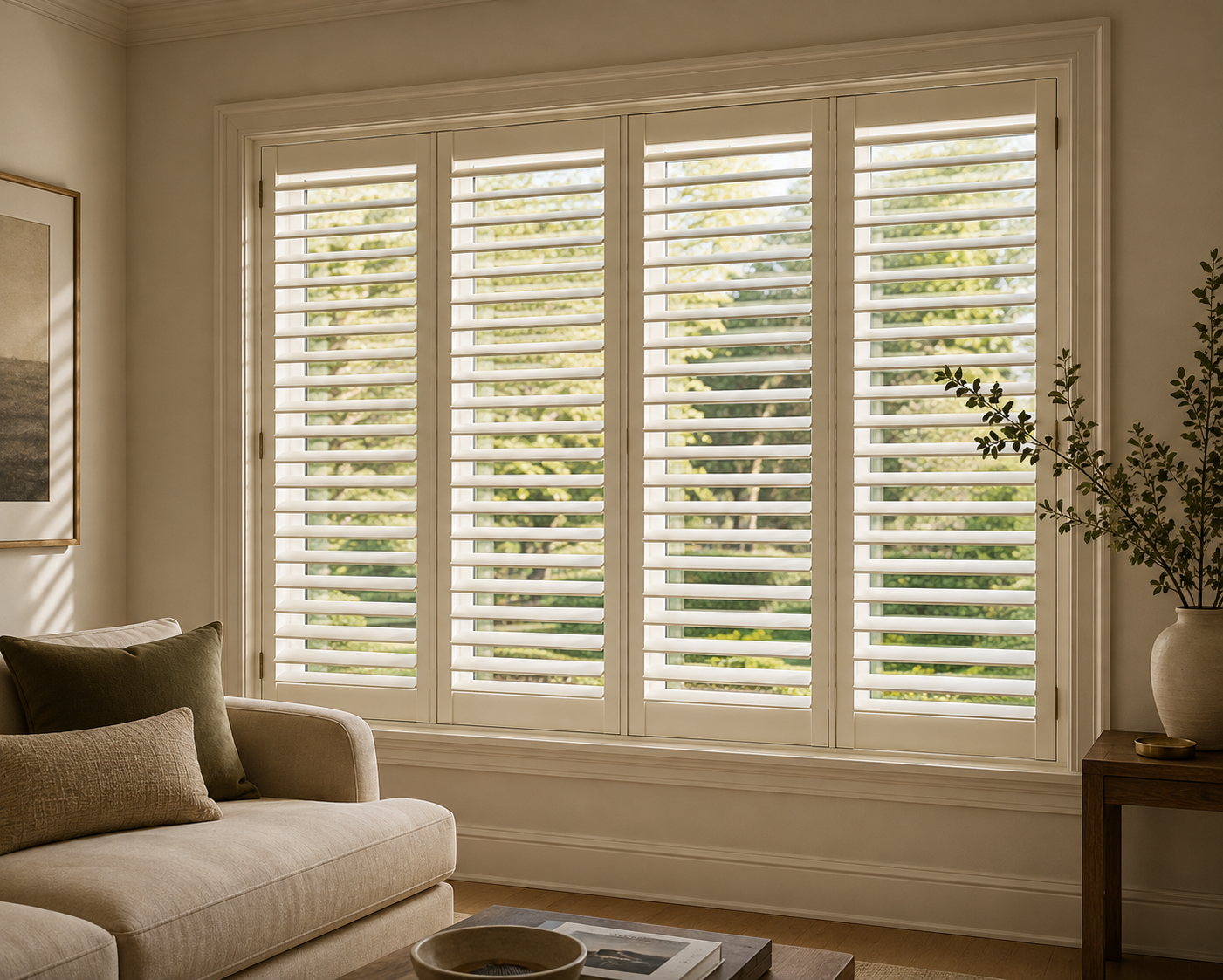
Pleated shades stack the tightest; venetian gives tilt control; a vented option lets air pass while blocking direct sun.
Choose how you reach it
A crank pole is the standard low-cost answer. Motorization is worth it the moment the skylight is above a stairwell or vaulted ceiling.
Pleated, venetian, or vented?
All three fit the same guide-rail frame. Here is where each one actually wins.
Still weighing it up? We will bring all three to your window and you can see them against your own light.
Book a Free ConsultationWhere skylight blinds wins in DFW homes
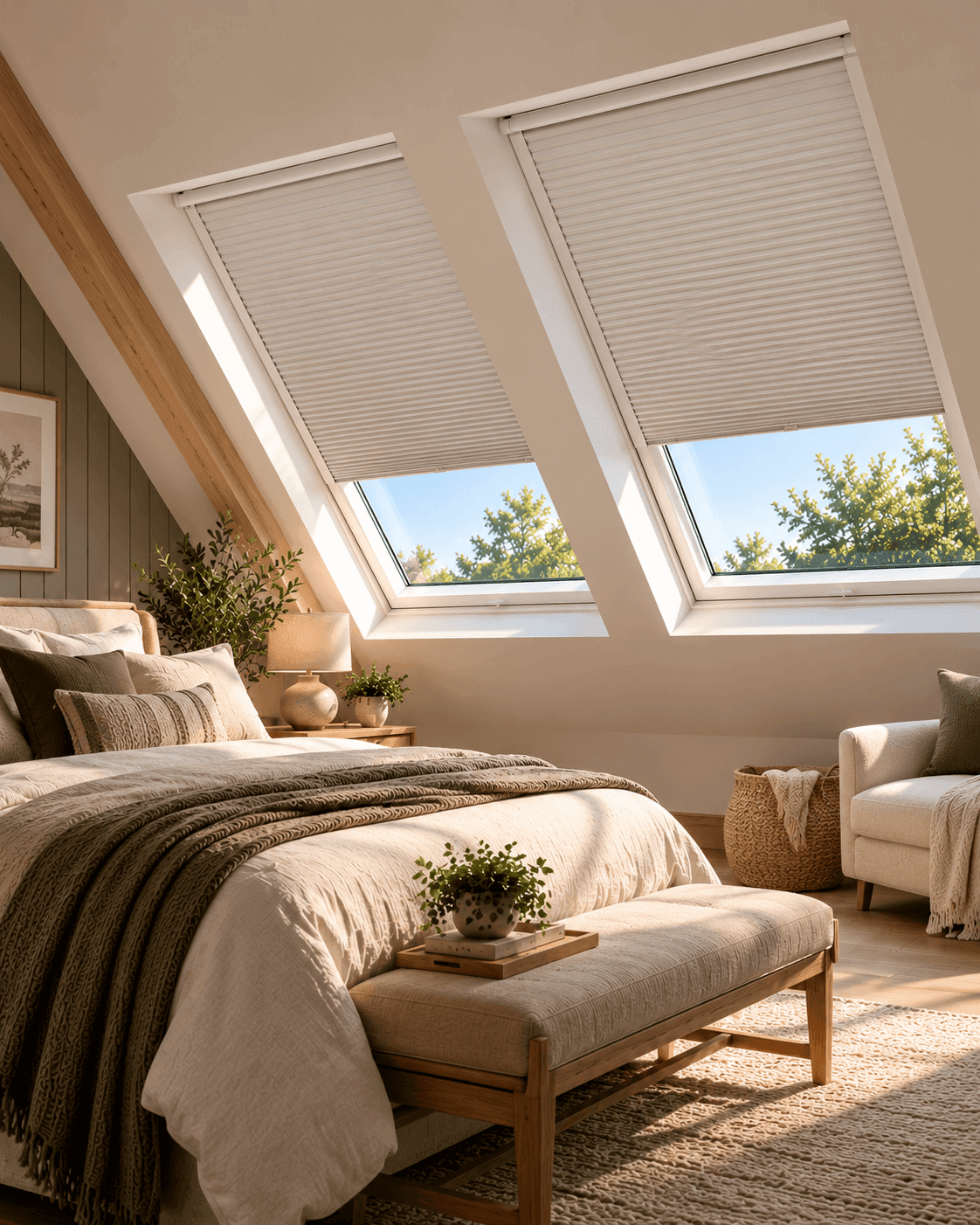
Attic bedrooms
Blackout-backed pleats for full darkness under a roof window.
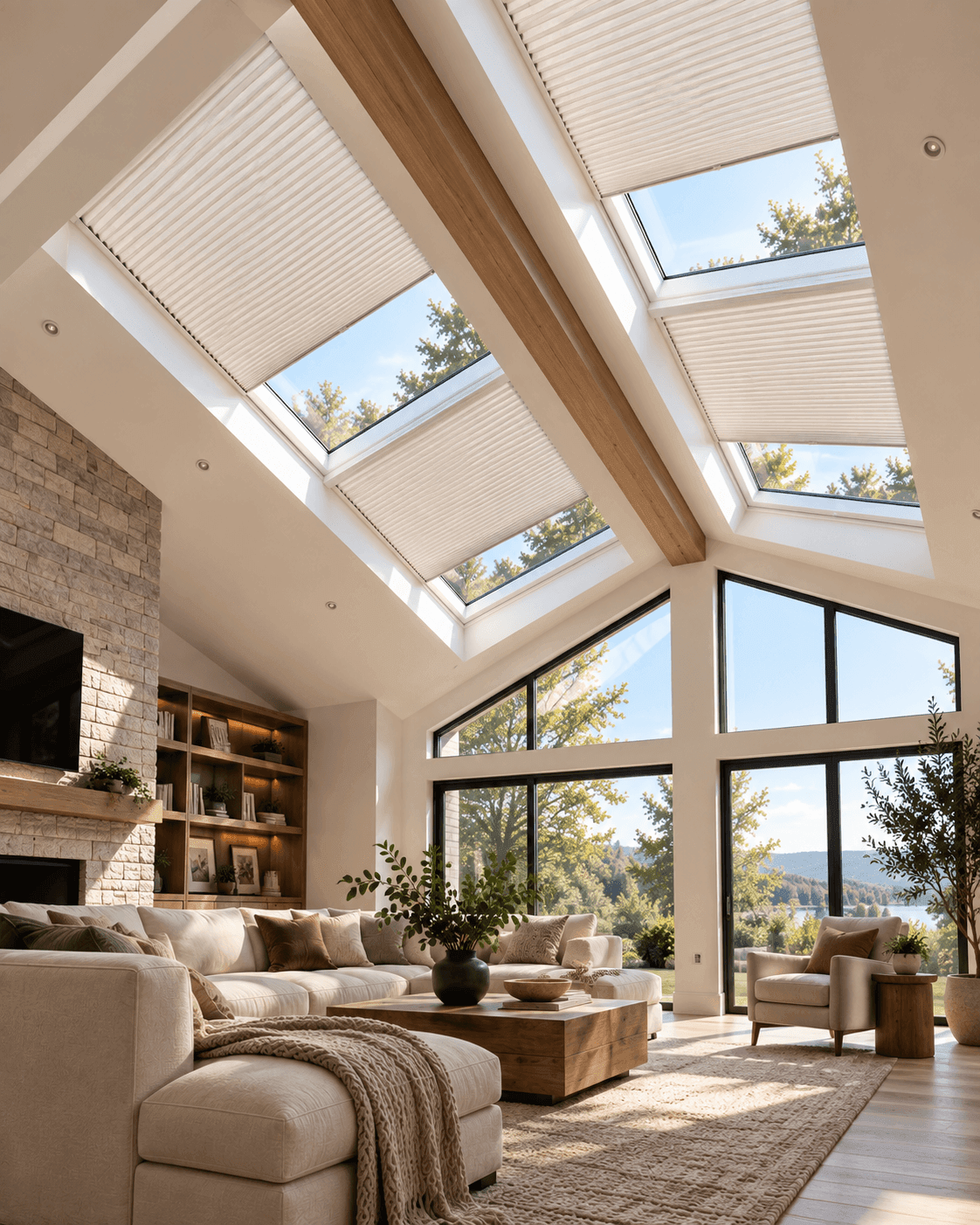
Vaulted living rooms
Motorized control for skylights well out of pole reach above a great room.
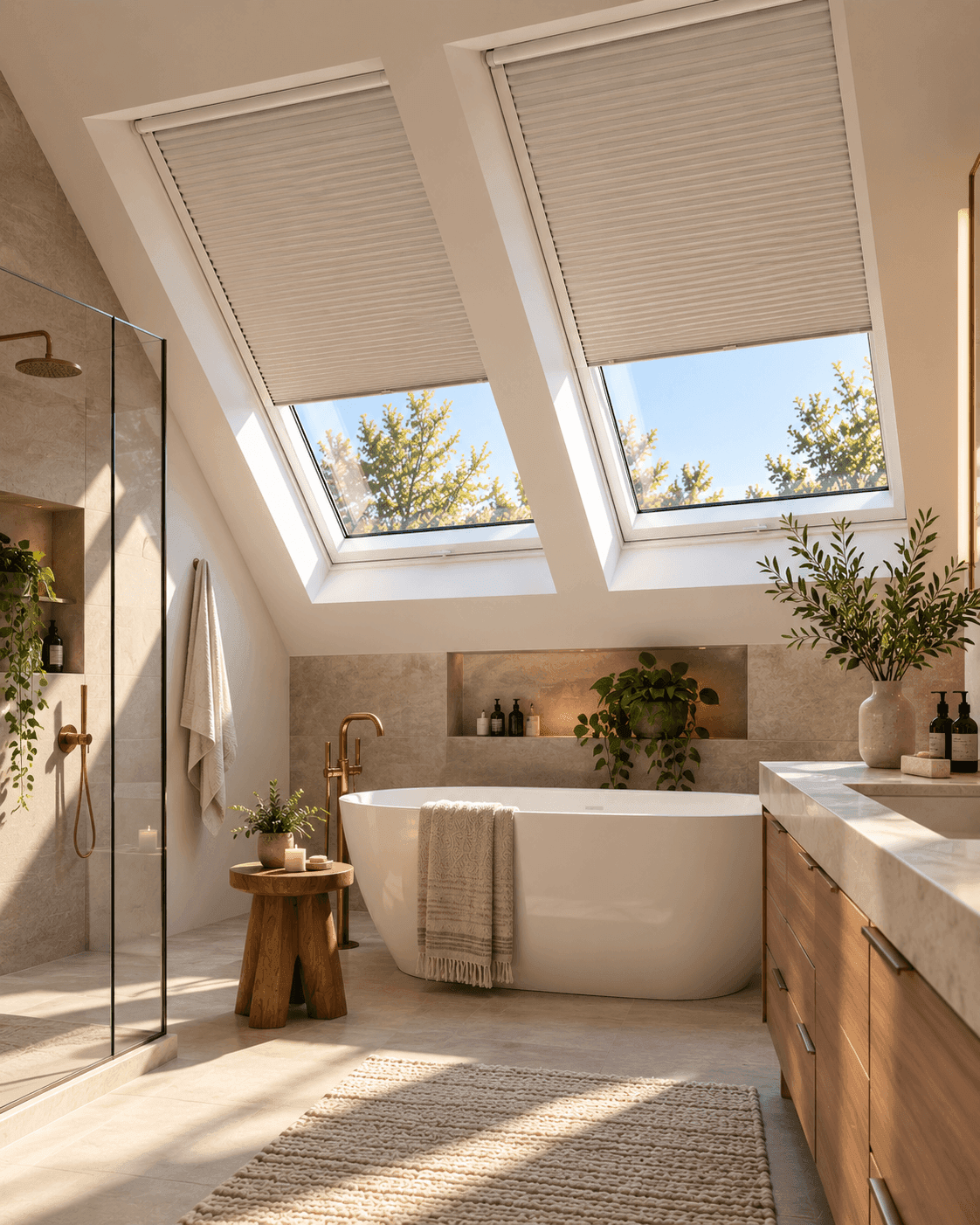
Bathrooms
Venetian tilt control balances privacy and daylight above the tub.
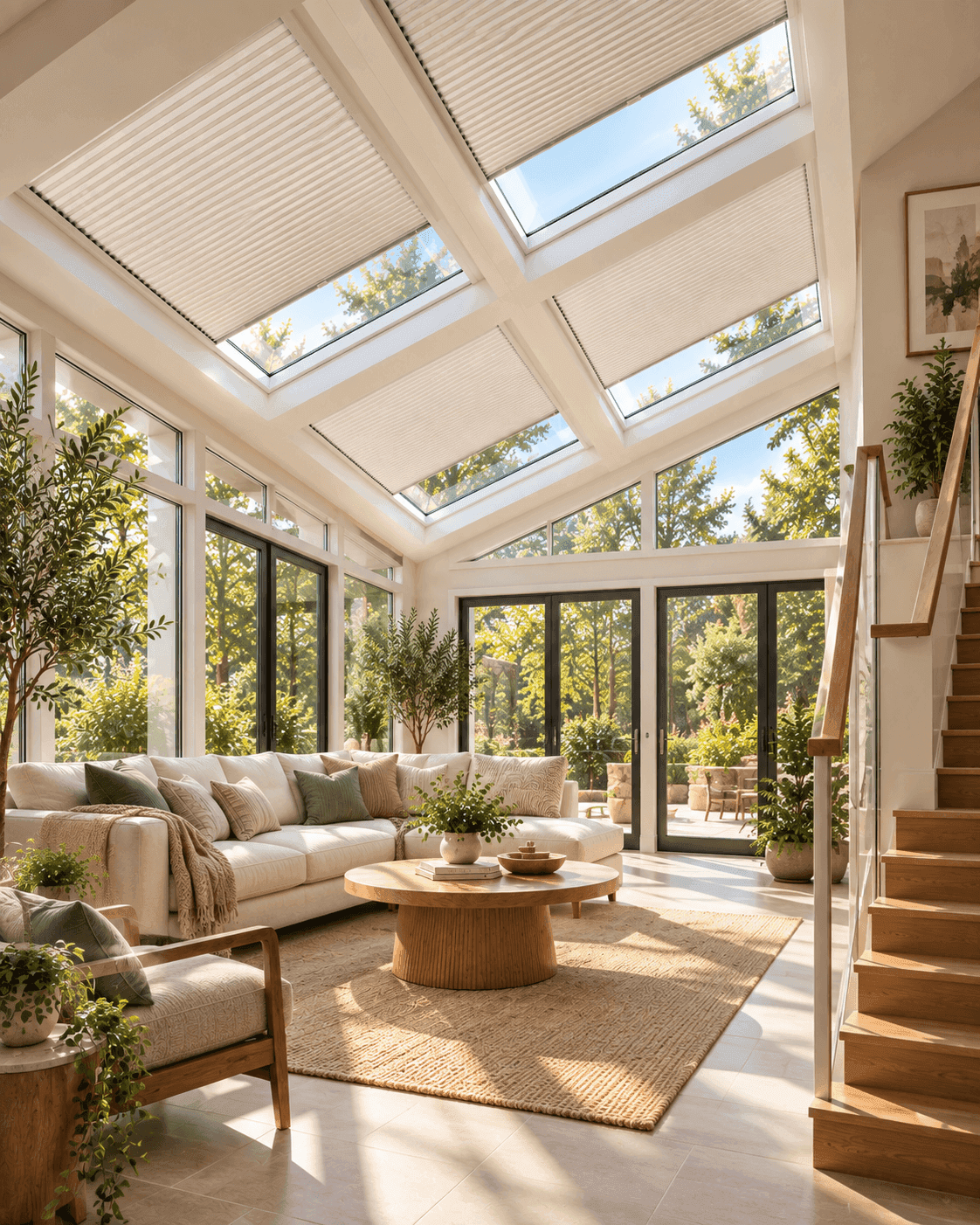
Sunrooms & stairwells
Reflective fabric cuts summer heat gain through south-facing roof glass.
Our stairwell skylight has been unreachable for years. The motorized option and remote solved it completely, and the fit is perfect.
The reflective fabric made a real difference in our sunroom on the hottest days this summer. Wish we had done it sooner.
They measured the exact pitch of our vaulted ceiling window and the blind holds perfectly flat. No sagging at all.
Placeholder quotes — replace with real Google reviews before launch.
Skylight blinds, answered
Anything not covered here, call and ask — you will reach someone who measures roof windows for a living.
(682) 271-7646What are skylight blinds? +
Skylight blinds are pleated or venetian shades built to fit fixed at both edges into the frame of a roof window, so they stay in place at any tilt instead of sliding with gravity.
How do you operate a skylight blind you can’t reach? +
A telescoping crank pole is the standard low-cost option; motorized skylight blinds run on a remote, app, or wired wall switch for skylights above stairwells or vaulted ceilings.
Do skylight blinds block heat as well as light? +
Yes. A reflective or blackout-backed pleated fabric blocks both glare and a meaningful share of solar heat gain, which matters most on south-facing roof windows in North Texas.
How much do skylight blinds cost in DFW? +
Most skylight blinds land between $250 and $600 per window, installed, depending on size, fabric, and whether the operation is a crank pole or a motor. Your quote is fixed once we have measured.
Can skylight blinds be motorized? +
Yes, and it is the most common upgrade on this product — remote, app, or wired switch control for any skylight that is difficult or unsafe to reach with a pole.
Ready to transform your space?
We measure the exact pitch and reach of every roof window while we are there, and bring fabric samples to hold against your light. You leave with clear recommendations and pricing — no obligation.