Motorized Blinds in Dallas: What They Cost and Whether They’re Worth It
Straight answers on power, price, and the windows where motorization actually earns its keep.
There’s a version of motorized blinds that’s a gadget — an app you open twice, then never again.
And there’s a version that quietly solves a problem you’d otherwise live with forever: the window above the staircase you’ve never once adjusted, the west-facing wall that cooks your living room every afternoon at four, the media room where “closing the blinds” means walking behind the sofa.
The difference isn’t the technology. It’s whether you put it on the right windows.
The Short Answer on Cost
In the Dallas–Fort Worth market, expect $350 to $900 per window for motorized blinds and shades, installed.
That breaks down roughly as:
| Component | Cost |
|---|---|
| The blind or shade itself | $150–$400 |
| Motor | $150–$350 |
| Remote or hub | $50–$200 (often shared across windows) |
| Installation | $75–$150 per window |
The motor is the premium. Expect motorization to add $200 to $400 per window over the same product operated by hand.
“Motorization isn’t a product upgrade. It’s a solution to windows you were never going to adjust anyway.”
How Motorized Blinds Are Powered
This is the question people ask most, and the answer determines your install cost more than anything else.
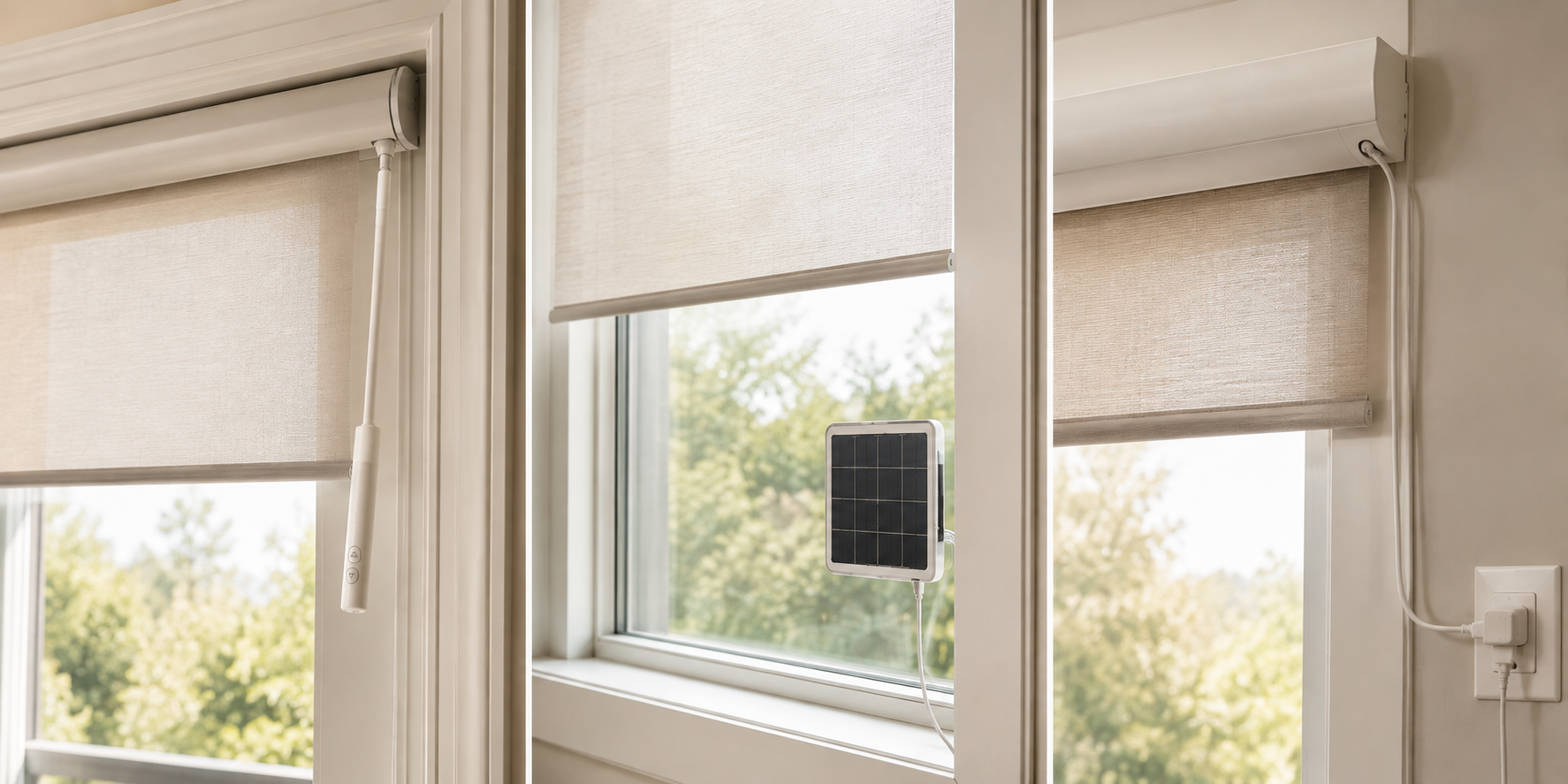
Rechargeable Battery
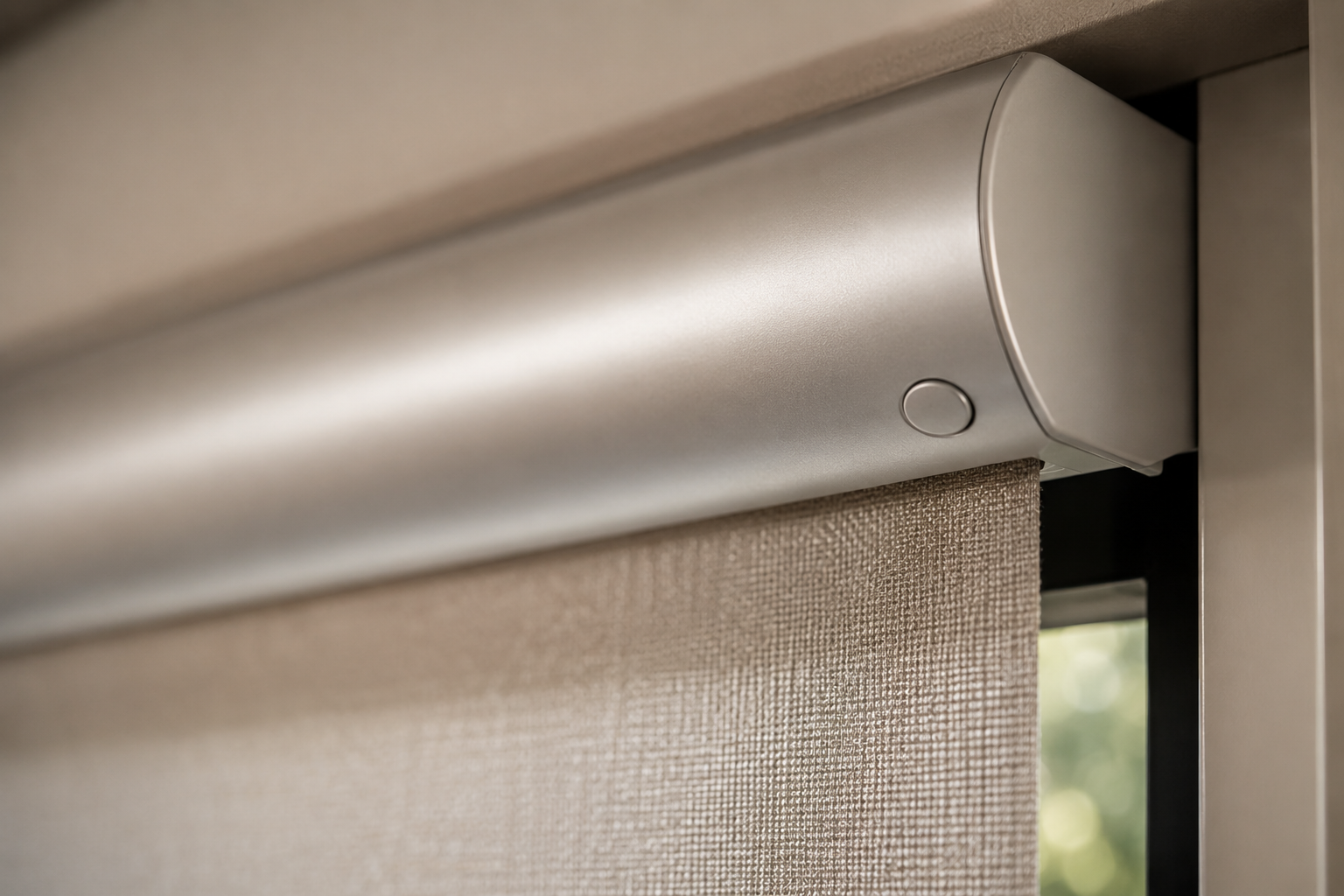
A lithium battery wand clips into the headrail. You charge it with a USB cable every 8 to 14 months, depending on how often the blind cycles.
No wiring, no electrician, no wall damage. This is what most Dallas homes end up with, and it’s the reason motorization is now realistic in an existing house rather than only in new construction.
The trade-off is recharging. On a window you can reach, that’s a five-minute annoyance once a year. On a 20-foot great room window, it means getting a ladder — which is exactly the window you motorized to avoid climbing.
Solar
A small panel mounts to the window glass or headrail and trickle-charges the battery from ambient daylight.
In North Texas this works genuinely well. DFW averages well over 200 sunny days a year, and a south- or west-facing window produces more than enough light to keep a shade topped up indefinitely. On those exposures, solar effectively means never touching it again.
North-facing windows and heavily shaded rooms are a different story — solar there is supplemental, not a replacement for occasional charging. Add roughly $50–$100 per window.
This is the answer for high windows. Solar plus a sun-facing exposure eliminates the ladder problem entirely.
Hardwired
A low-voltage line runs to the window and powers the motor permanently. Nothing to charge, ever, and hardwired motors tend to be quieter and stronger — which matters on wide or heavy shades.
The catch is cost and disruption. In new construction or during a remodel with walls open, hardwiring is straightforward and adds maybe $100–$200 per window. Retrofitting into finished walls means an electrician, drywall repair, and paint. It’s rarely worth it for a handful of windows.
Where Motorization Actually Pays Off
Some windows justify the cost immediately. Others don’t.
Worth it:
- High and hard-to-reach windows. Two-story entries, great room walls, clerestory windows, stairwell landings. If you need a ladder, you will never adjust it. Motorization is the only thing that makes those windows functional.
- West-facing rooms. DFW afternoon sun is punishing from roughly 2 p.m. onward. Scheduled shades close before the heat arrives instead of after you’ve already noticed it.
- Large spans. A 10-foot-wide shade is genuinely heavy to lift by hand. Motors don’t care.
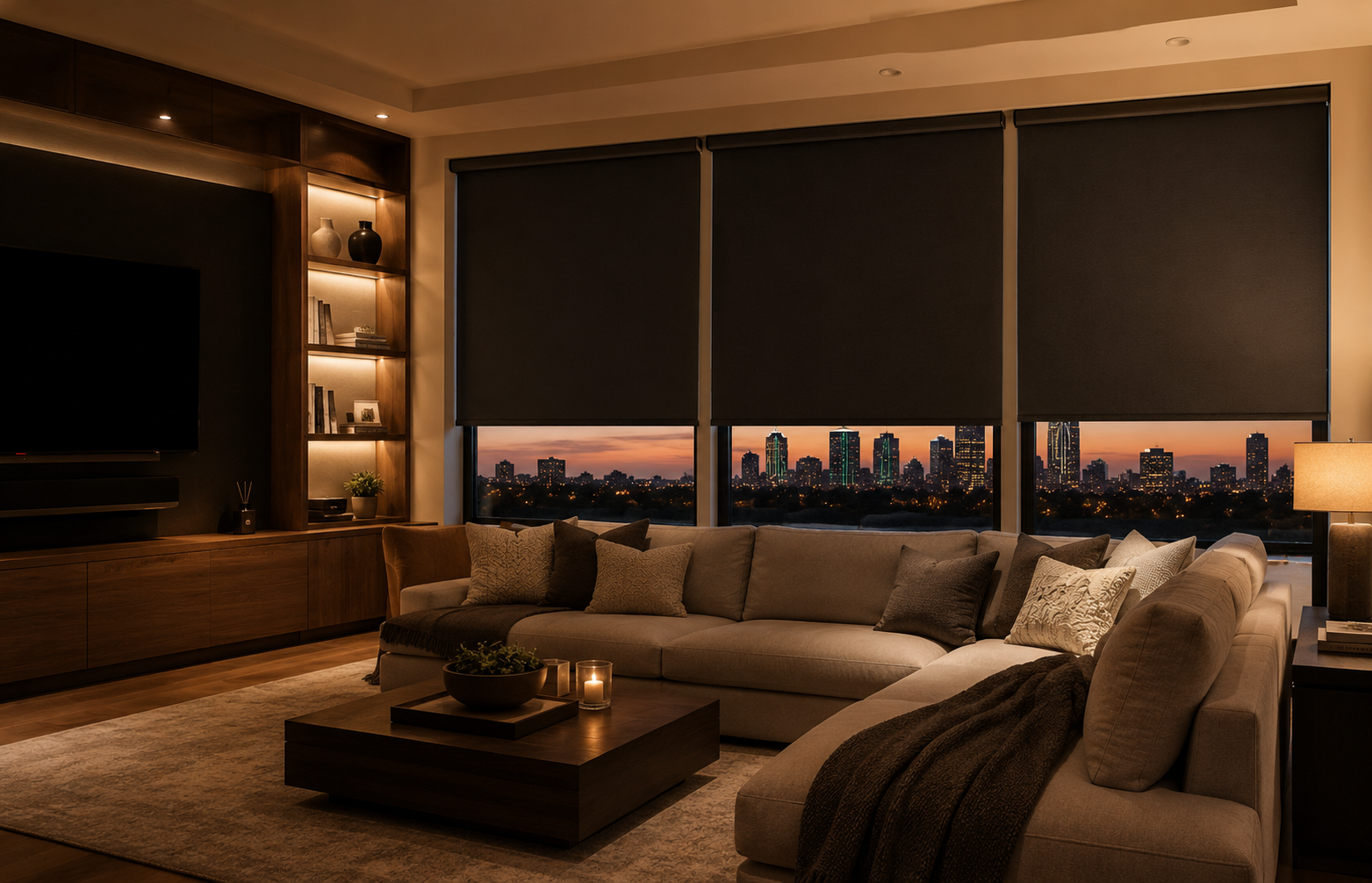
- Media rooms. One button takes the room from bright to blacked out.
- Whole-house scenes. Twenty windows closing together at sunset is the feature people actually use daily.
- Accessibility. For anyone with limited mobility or reach, this stops being a luxury.
Usually not worth it:
- Small bathroom and bedroom windows you already adjust without thinking
- Windows behind furniture you rarely open at all
- Rooms where a single manual blind does the job fine
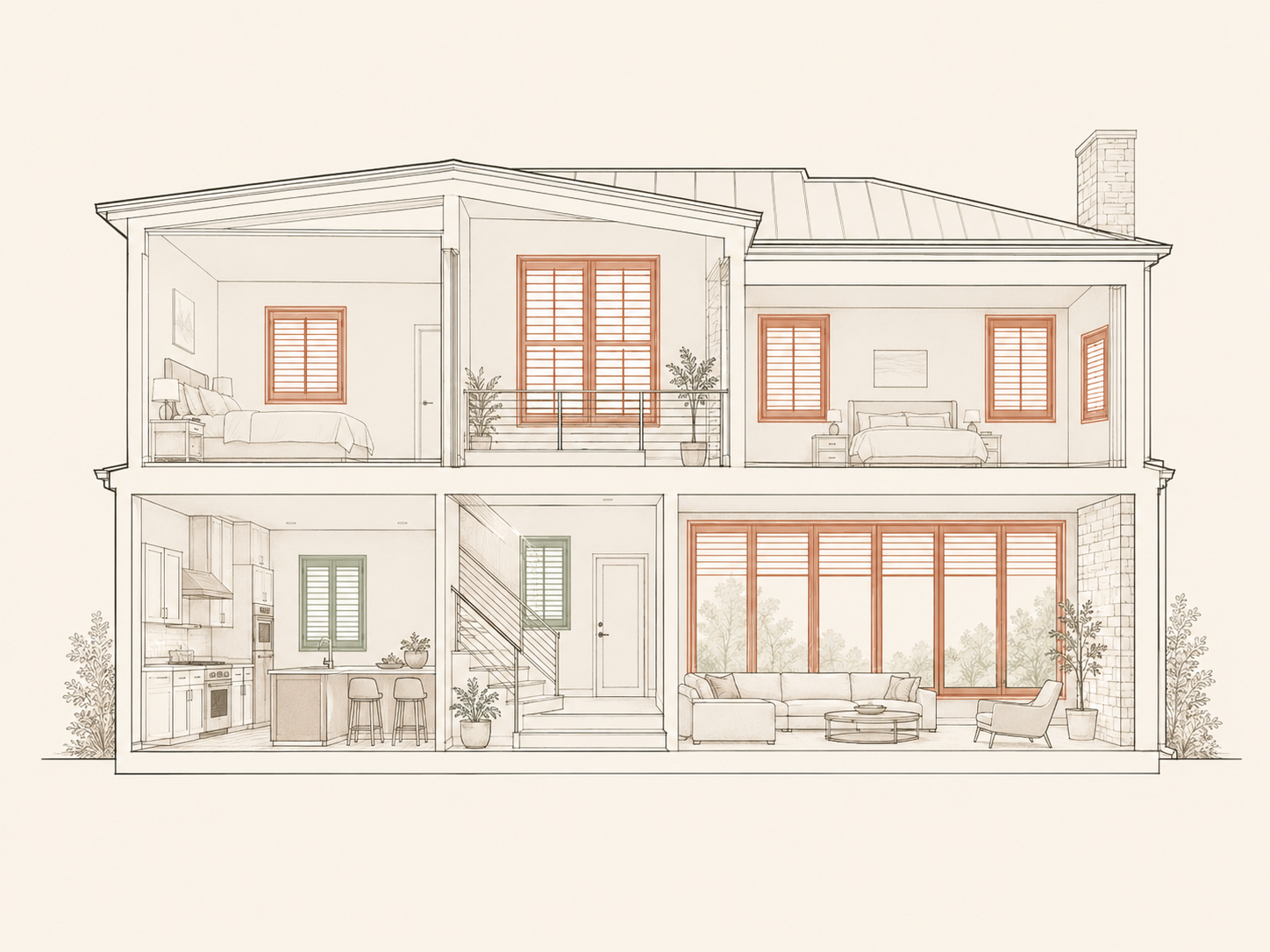
A common and sensible approach in DFW homes: motorize the top floor and the west-facing wall, keep everything else manual. You get the real benefit without motorizing thirty windows.
“Motorize the windows you can’t reach and the ones facing west. Leave the rest manual. That’s most of the value for a third of the cost.”
Smart Home Integration
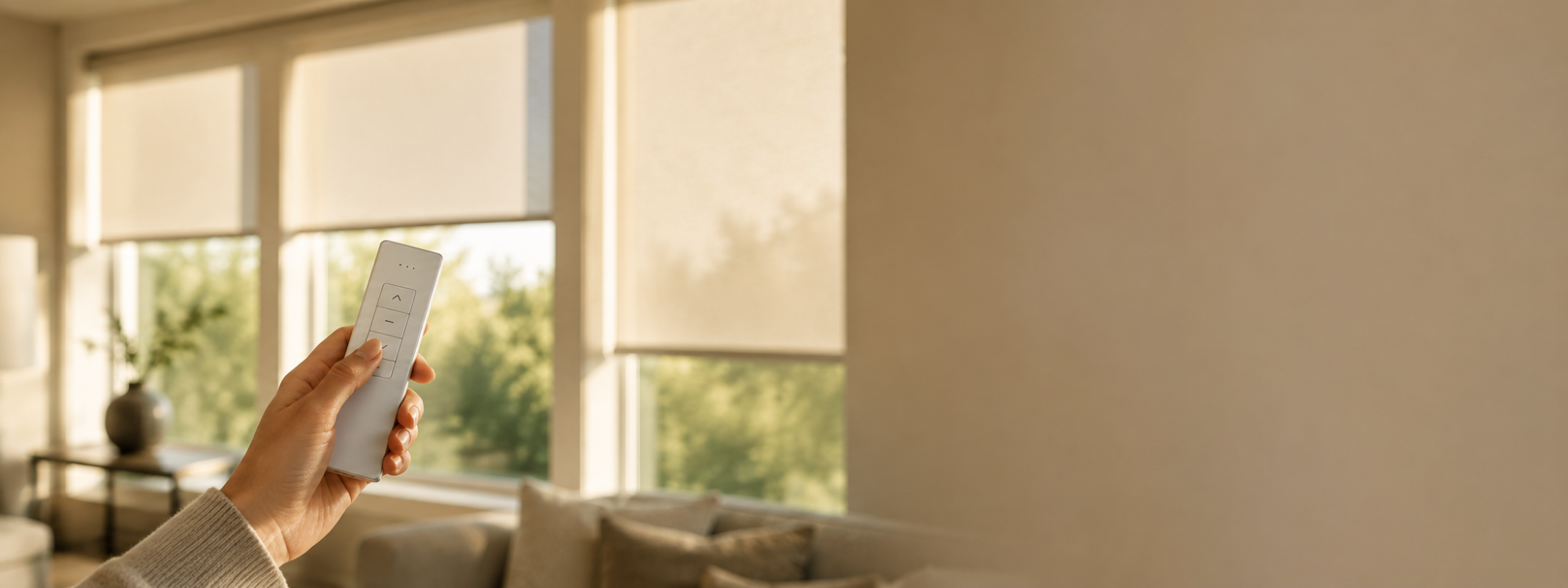
Most current motors connect through a hub to Amazon Alexa, Google Home, and Apple HomeKit. Some newer motors speak Matter or Thread directly and skip the hub entirely.
What people actually use, in order:
- Schedules. Open at 7 a.m., close at sunset. Set once, forget permanently. This is the killer feature and it requires no voice control at all.
- The remote. A physical remote on the wall or side table gets used far more than any app.
- Scenes. “Movie” drops the media room. “Away” closes everything.
- Voice. Genuinely useful when your hands are full. Novelty otherwise.
- The app. Used heavily for two weeks, then mostly for adjusting schedules.
One practical note worth insisting on: make sure your motors can still be operated manually. Good motorized blinds have a physical button on the headrail and work with the remote even if your Wi-Fi is down. If a quote only offers app control, that’s a real limitation, not a minor one.
What This Costs Across a Whole Home
| Scenario | Windows | Estimated Range |
|---|---|---|
| Great room wall only | 4–6 | $1,800 – $4,500 |
| Upper floor + west-facing rooms | 8–12 | $3,500 – $9,000 |
| Whole home — 2,500 sq ft Plano | 18–22 | $7,500 – $18,000 |
| Whole home — 3,500 sq ft Frisco | 25–30 | $11,000 – $26,000 |
Motors can also be added later. If you’re ordering shades now and unsure about motorization, ask specifically whether the product line supports retrofitting a motor into the existing headrail. Many do. That lets you motorize the great room today and the bedrooms in two years without replacing anything.
The Dallas Case for Motorization
North Texas makes a stronger argument for this than most markets.
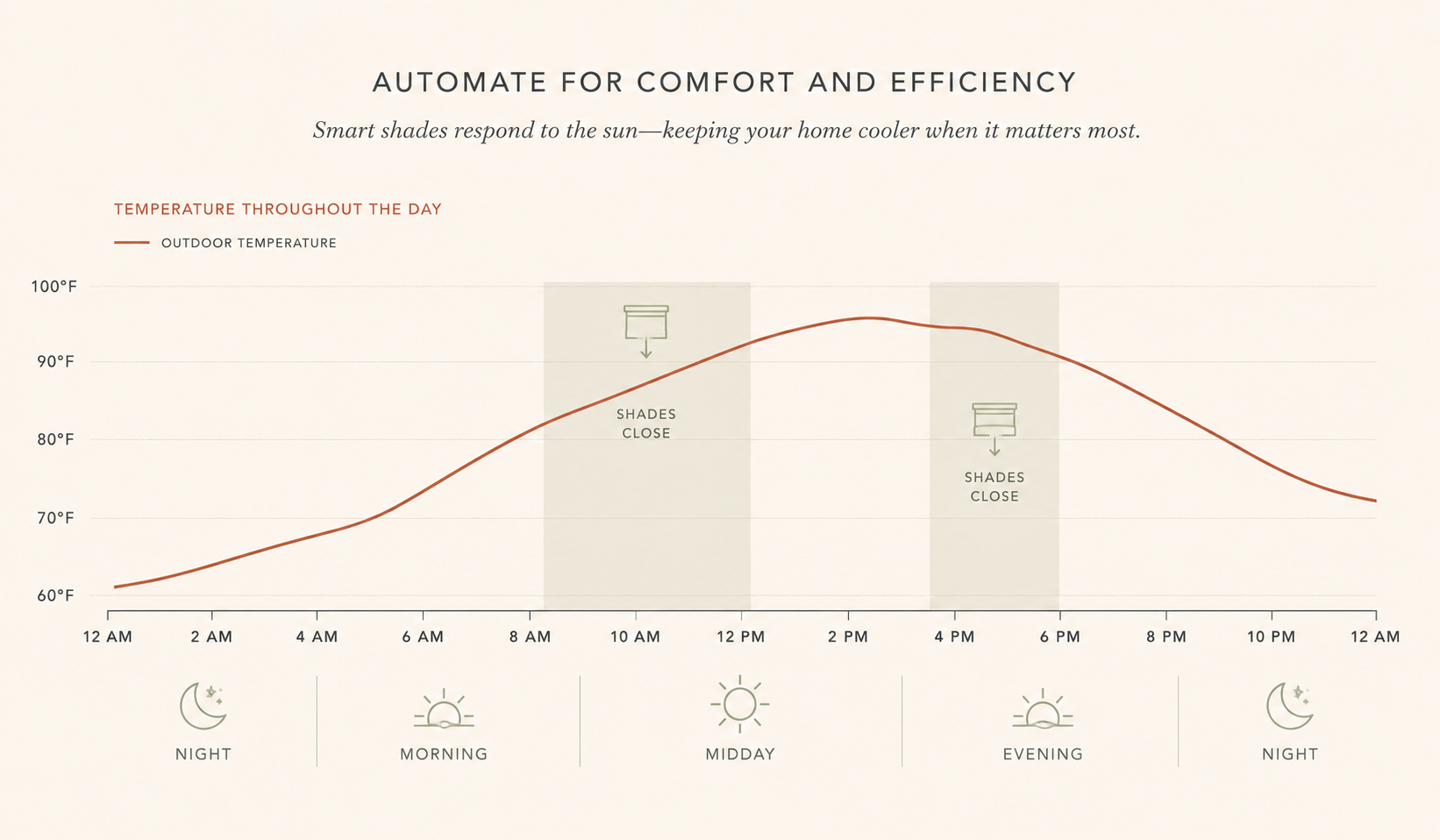
The heat is scheduled, so your shades should be too. Dallas summer afternoons follow a predictable pattern. Shades that close automatically at 2 p.m. on west-facing glass cut solar heat gain before the room warms up — which is materially more effective than closing them after you’ve noticed the temperature climbing. That’s a real reduction in cooling load across a Texas summer.
Modern DFW homes are built with enormous windows. Two-story great rooms and floor-to-ceiling glass are standard in Frisco, Prosper, and Southlake new construction. Those windows are the single strongest case for motorization, and there are a lot of them here.
Sun damage is real. Consistent afternoon shading protects flooring, artwork, and upholstery from UV fade. Consistency is precisely what automation delivers and human habit doesn’t.
Frequently Asked Questions
$350–$900 per window installed in Dallas–Fort Worth, depending on size, fabric, and motor type. Motorization typically adds $200–$400 per window over the same product operated manually.
Not usually. Most residential installs use a rechargeable lithium battery in the headrail, charged by USB roughly once a year. Solar panels can keep that battery topped up indefinitely on sun-facing windows. Hardwiring is an option but is generally only practical in new construction or during a remodel.
Three ways: rechargeable battery, solar-assisted battery, or hardwired low-voltage. Battery is most common in existing homes, solar is best for high or hard-to-reach windows, and hardwired suits new builds.
Good ones, yes — via a physical button on the headrail and an RF remote that works without Wi-Fi. Always confirm this before buying.
Sometimes. Certain product lines accept a retrofit motor in the existing headrail. Many older or big-box blinds don’t. It’s worth asking before assuming you need full replacement.
Typically 8–14 months between charges, depending on cycles per day and shade weight. Solar-assisted setups on south- or west-facing windows often never need manual charging.
On high windows, large spans, west-facing rooms, and media rooms — yes, clearly. On small windows you already adjust by hand, the cost is hard to justify. Most homeowners get the best return by motorizing selectively rather than whole-house.
See It Working Before You Buy
Motorized blinds are difficult to evaluate from a website. The things that matter — how quiet the motor is, how smoothly the shade travels, how the fabric filters your specific afternoon light — only register in person.
Arcadia Blinds brings working motorized samples to your home, free of charge. We’ll measure your windows, demonstrate battery and solar options in your own light, and tell you honestly which of your windows justify motorization and which don’t.
📞 (214) 631-9432 ·
Book Your Free In-Home Consultation →
Serving Dallas, Plano, Frisco, McKinney, Highland Park, University Park, Richardson, Irving, Fort Worth, Southlake, Prosper, and surrounding North Texas communities.