Plus the thing about nighttime privacy that most companies won’t bring up until after you’ve paid.
I’ve had this conversation in probably three hundred Dallas living rooms, and it always starts the same way. Someone points at the window and says, “I want those, the ones you can see through but they still block the sun.” Then, a beat later: “Wait, is that a shade or a blind?”
Here’s the thing nobody tells you up front, and it clears up about 90% of the confusion.
A solar shade is a roller shade. Same hardware, same mechanism, same tube. The only difference is the fabric on it.
That’s it. That’s the whole distinction.
So What Are We Actually Choosing Between?
Every roller shade is a flat piece of material wrapped around a tube at the top of your window. Pull it down, it covers the glass. Let it up, it disappears. Simple, and honestly that simplicity is why they’ve held up in design for decades while other treatments came and went.
What you’re really deciding is which fabric goes on the tube.
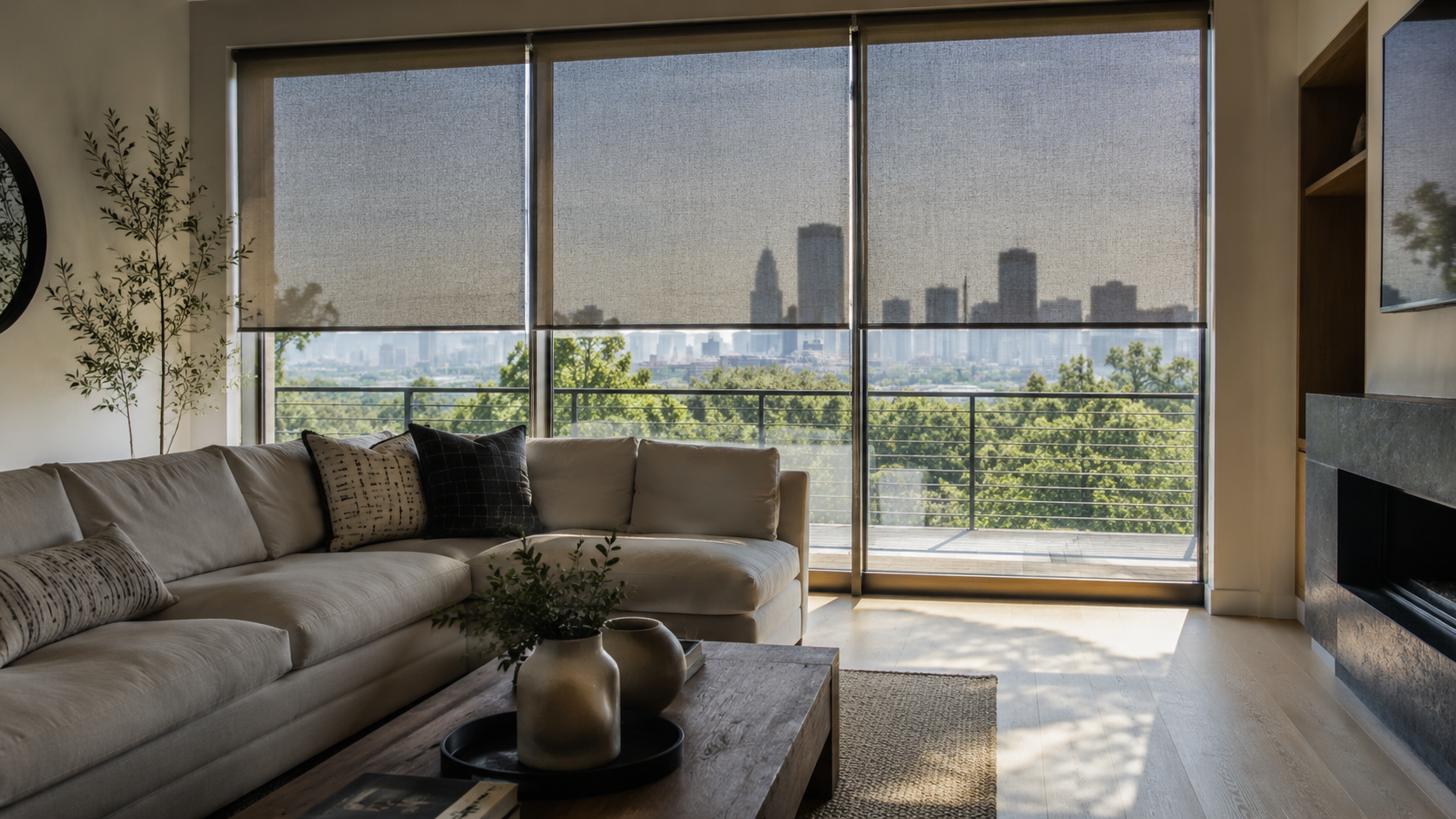
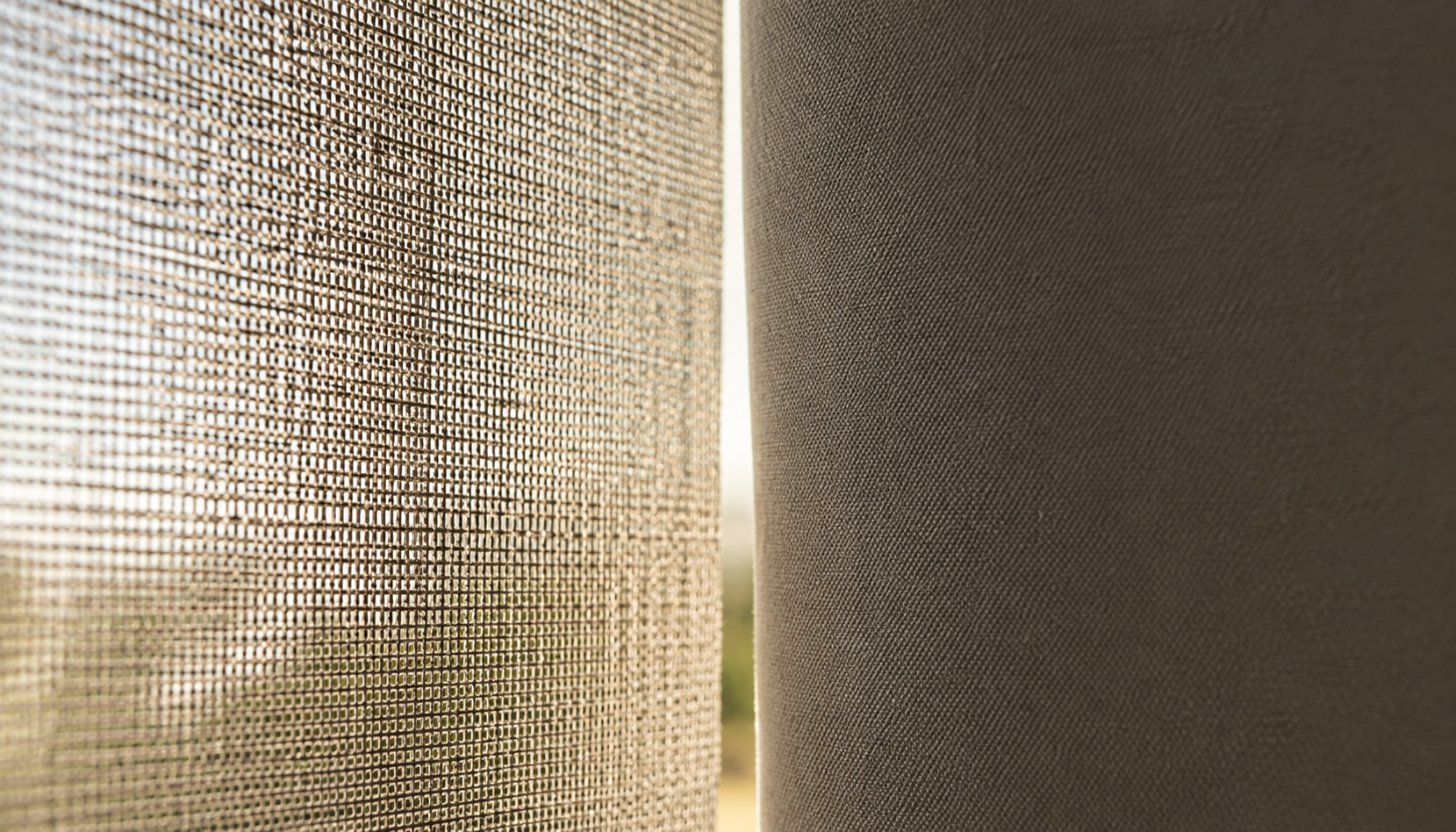
Solar screen fabric is woven, like window screen but finer. It has tiny openings across the whole surface, which is what lets you see through it. It cuts UV, kills glare, and takes the edge off the heat, but you keep your view.
Decorative or blackout fabric is solid. No weave, no openings. You get privacy and darkness, and you give up the view entirely.
And “roller blinds”? That’s mostly a regional wording thing. In the UK, people say roller blinds for what Americans call roller shades. Same product. If a company is selling you “roller blinds” and “roller shades” as two different things at two different prices, ask them to explain the difference, because there isn’t one.
“A solar shade is a roller shade. Same hardware, different fabric. That one sentence saves most people an hour of confusion.”
Openness Factor, the Only Spec That Really Matters
If you go with solar screen, you’ll get asked about openness. It sounds technical. It isn’t.
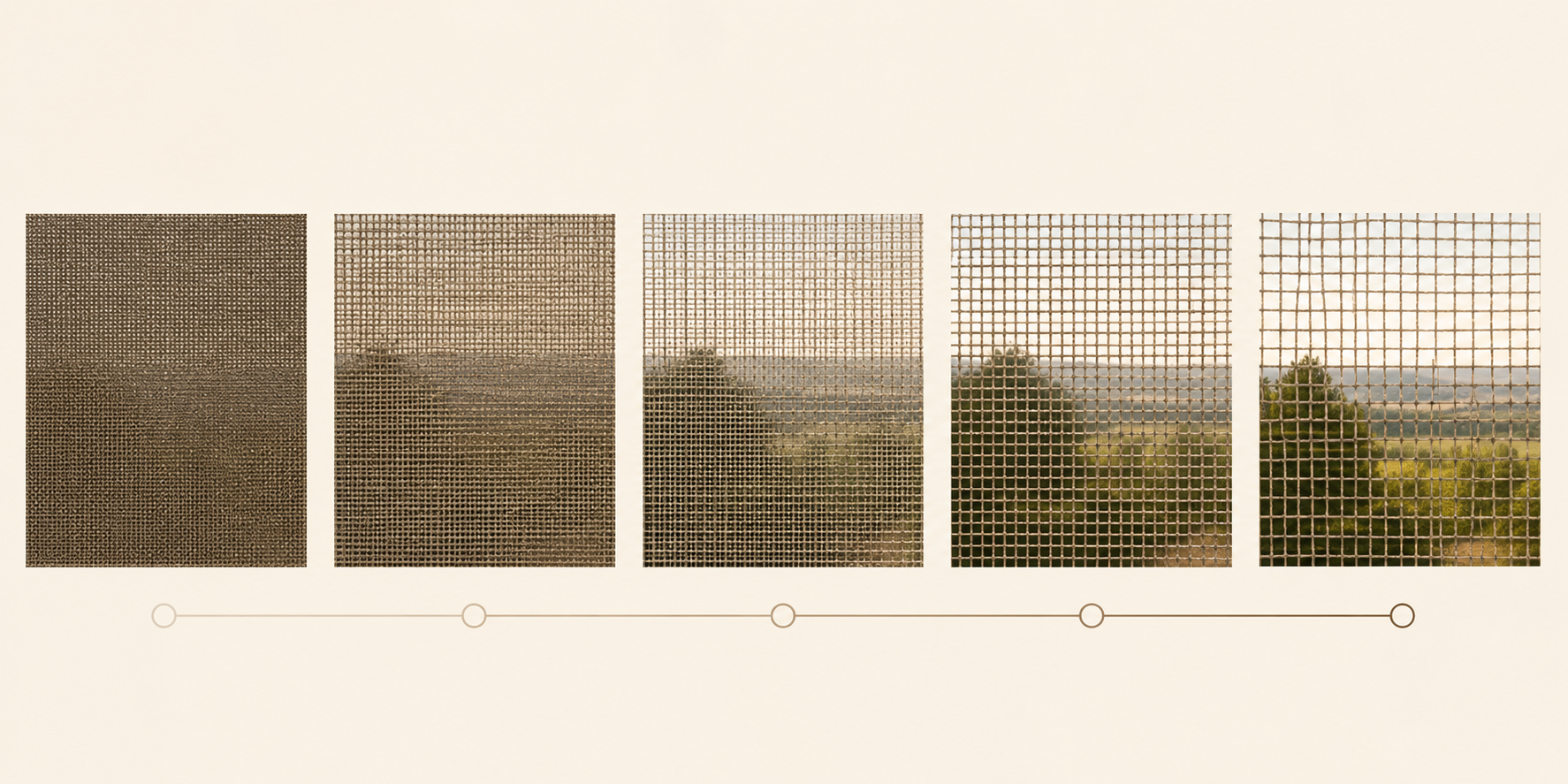
Openness factor is the percentage of the fabric that’s holes. A 5% openness fabric is 5% open weave and 95% solid material.
Lower number, tighter weave, less you see through, more sun it stops. Higher number, looser weave, better view, less protection. That’s the entire trade off.
| Openness | View Through | Sun Control | Where I Use It |
|---|---|---|---|
| 1% | Very limited | Maximum | Brutal west windows, media rooms, offices with screen glare |
| 3% | Soft, hazy | Excellent | West and southwest exposures |
| 5% | Clear | Very good | The Dallas default, best all around |
| 10% | Very clear | Moderate | East windows, shaded rooms |
| 14% | Wide open | Light | North facing, or when the view is the whole point |
Nine times out of ten in a DFW home, I’m putting 5% on the main living areas and 3% on anything facing due west. That combination handles a Texas afternoon without making the room feel closed in.
One more thing about fabric that surprises people. Dark fabrics give you a better view than light ones. It seems backwards. But a dark screen reduces glare on the fabric surface itself, so your eye reads through it more easily. Same reason sunglasses are tinted dark and not white. Light fabrics reflect more heat back outside, but you’ll look through a bit of haze.
I usually recommend charcoal or bronze for rooms where the view matters, and a lighter fabric where it doesn’t.
Let’s Talk About Nighttime
This is the part I make sure to say out loud during every consultation, because if I don’t, it becomes a phone call three weeks after installation.
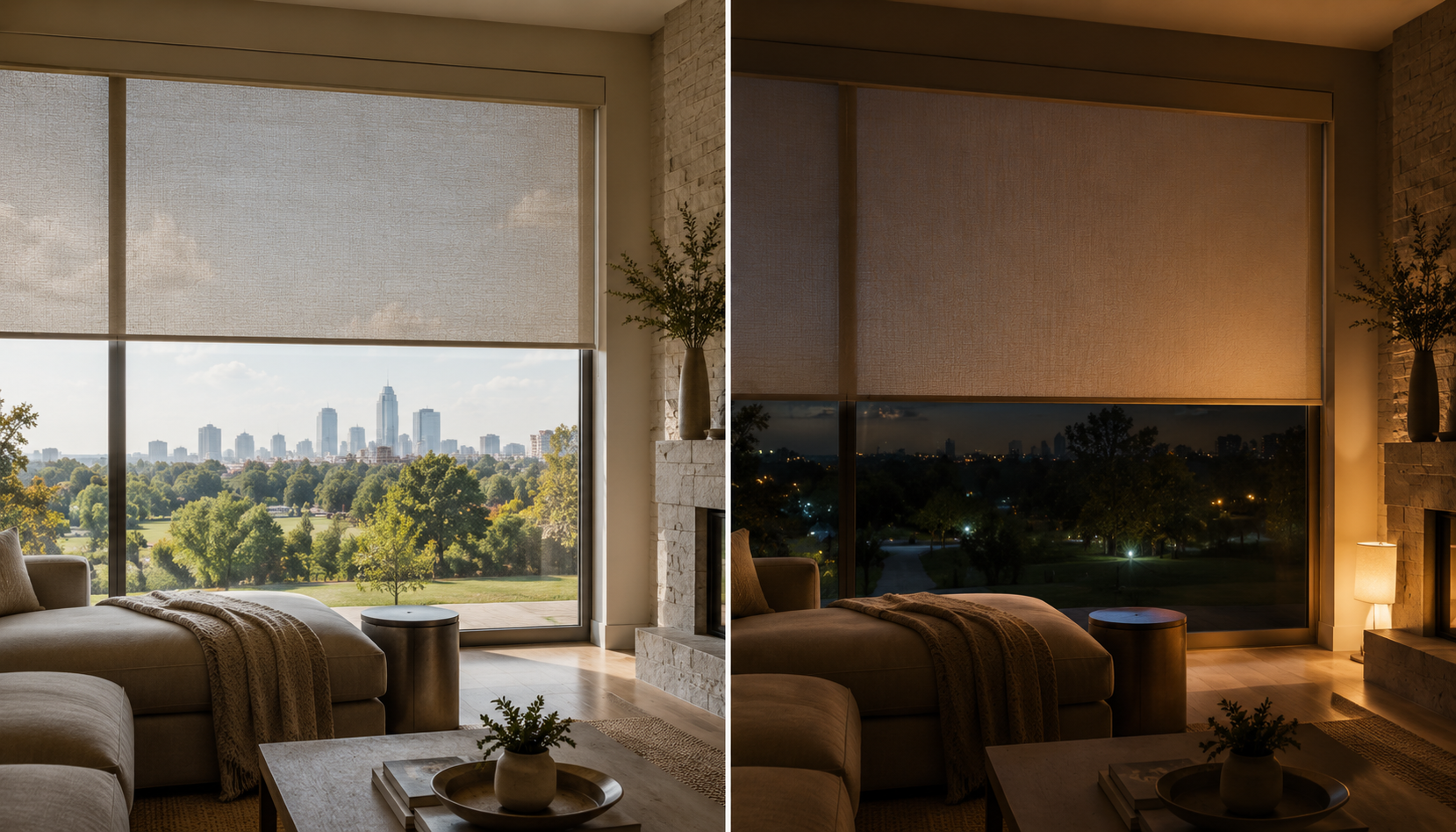
Solar shades reverse after dark.
During the day, the sun is brighter outside than in. You see out, nobody sees in. It feels like magic and it’s the reason people fall in love with these things.
At night, you turn on your lamps and the relationship flips. Now the bright side is inside. From the street, a solar shade with a lit room behind it reads as somewhere between frosted glass and not much at all, depending on openness. At 10% or 14%, you’re visible in silhouette. At 1% or 3%, much less so, but “much less” isn’t “not at all.”
I’m not telling you this to talk you out of solar shades. I put them in my own house. I’m telling you because where you put them should account for it.
Living rooms, kitchens, dining rooms, home offices, all fine. You’re not doing anything at 9 p.m. that requires the privacy of a bedroom.
Bedrooms and ground floor bathrooms facing a street or a neighbor are a different story. That’s where I’d either go solid blackout fabric, or do what most of my clients end up doing, which is layer them. Solar shade for the day, blackout roller or drapery behind it for the night. Two treatments on one window sounds excessive until you live with it for a week.
“During the day you see out and nobody sees in. After dark, that flips. Any company that doesn’t mention this isn’t doing you a favor.”
Dual Shades, When You Want Both
If layering sounds like a hassle, there’s a version built into one unit.
Dual roller shades put two fabrics on a single bracket system, usually a solar screen and a blackout, that operate independently. Pull one down during the day, drop the other at night.
Zebra or banded shades take a different approach. Alternating sheer and opaque stripes on one fabric that shift as the shade moves. Line up the opaque bands and you’re private. Line up the sheers and you’re filtering light.
Zebras look sharper and cost less. Duals actually work better, because the blackout layer is real blackout and not a stripe. In a bedroom I’ll take the dual every time. In a living room where it’s about looks and daytime flexibility, zebras are great.
Fitting Them Right
Roller shades live or die on installation, more than any other treatment I work with. A few things I’d insist on.
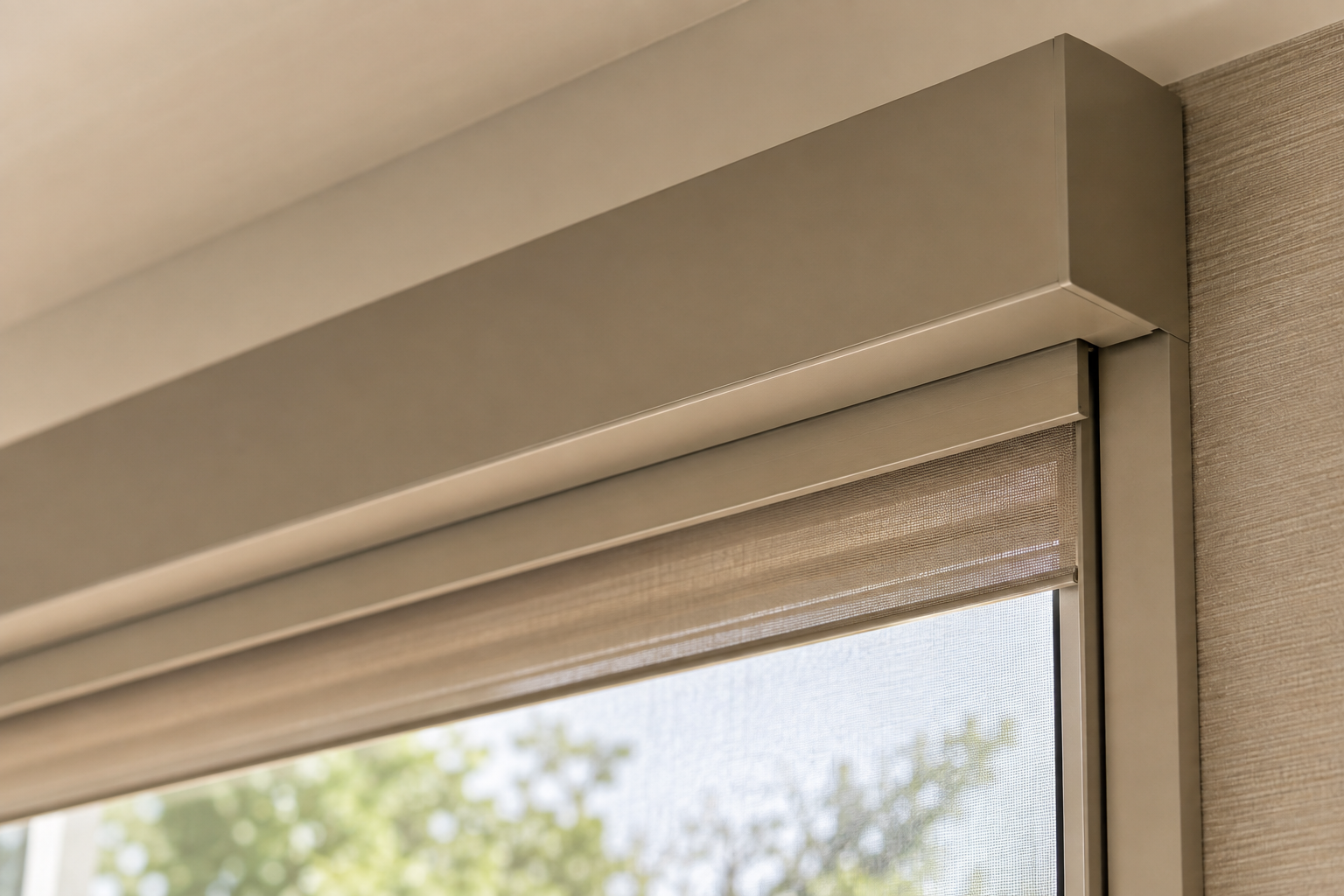
Cassette or fascia. A bare roller tube shows the rolled fabric and the mechanism at the top of your window. A cassette wraps it in a clean housing. It’s a small upcharge and it’s the difference between custom and rental.
Side channels, if heat or light is the point. Roller shades naturally leave a small gap at each edge where the fabric is narrower than the bracket span. On a bedroom blackout shade, that gap is a bright stripe on your wall at 6 a.m. Side channels close it.
Inside mount whenever the window depth allows. Cleaner look, and it lets the trim frame the shade. Outside mount when depth is shallow or you need to hide an awkward window.
Go cordless. Corded shades are being phased out across the industry for child and pet safety reasons anyway, and honestly the cordless mechanisms are better now. Spring lift for standard windows, motorized for anything high or wide.
What They Run in Dallas
| Type | Per Window, Installed |
|---|---|
| Basic roller, standard fabric | $90 to $200 |
| Solar screen shade | $120 to $350 |
| Blackout roller | $130 to $300 |
| Dual roller (two fabrics) | $250 to $550 |
| Zebra or banded | $150 to $400 |
| Motorized, any of the above | add $200 to $400 |
Big windows push these numbers up fast, and DFW has a lot of big windows. A 12 foot great room span isn’t twice a standard window. It’s closer to three times, because wide fabric needs a heavier tube to keep from deflecting in the middle.
Where I’d Put Them in a Dallas Home
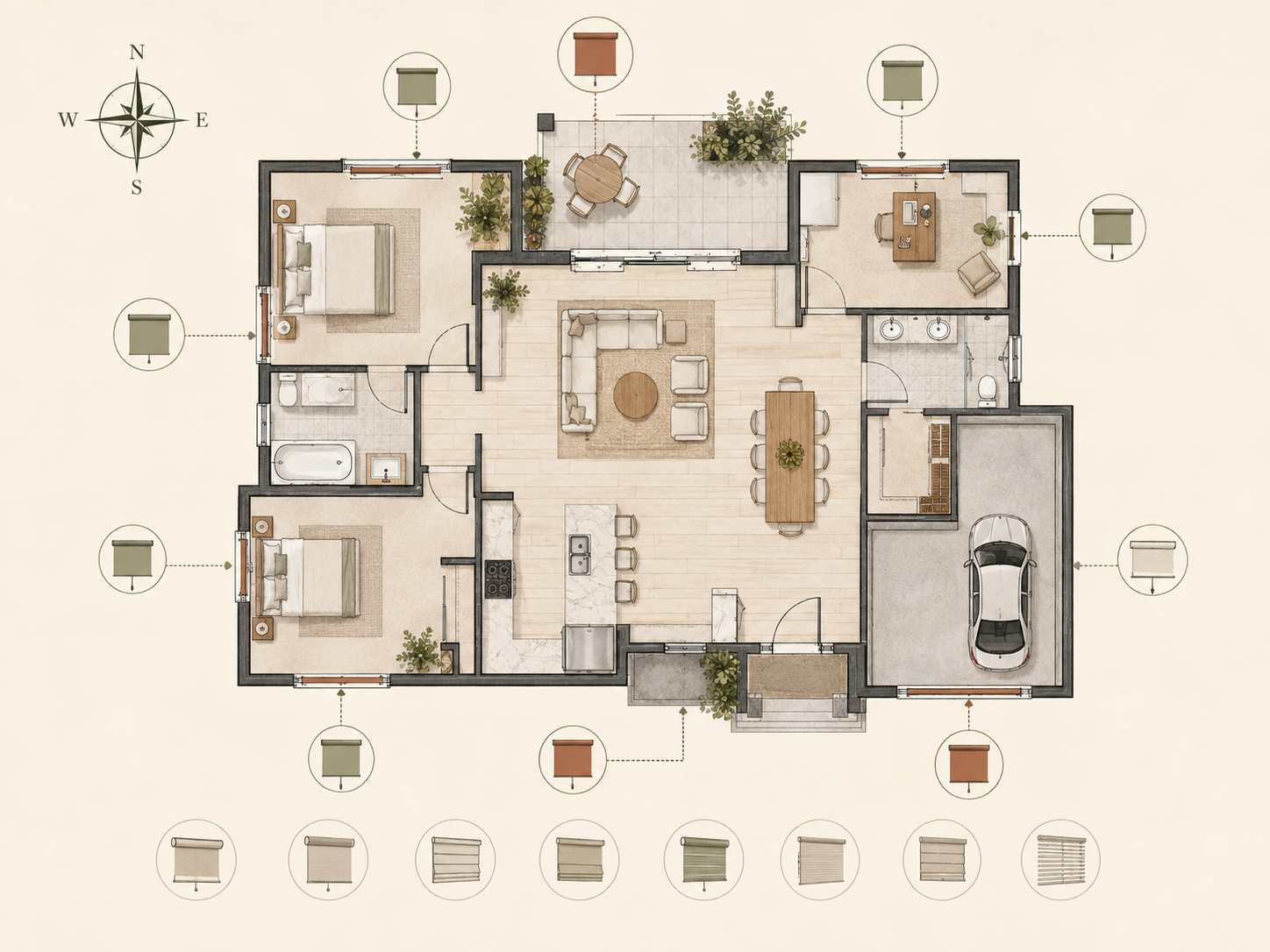
West facing living room. 3% solar screen in a dark fabric. This is the single best application for this product in North Texas, and the room people are usually most frustrated with when they call me.
Home office. 5% solar. Screen glare disappears, view stays.
Kitchen. Roller in a wipeable fabric. Grease and steam wreck anything textured.
Bedroom. Blackout roller with side channels, or a dual if you want daytime view too.
Media room. 1% solar or straight blackout. No debate.
Patio doors. Solar screen on a wide roller, or panel track if the span is really long.
North facing anything. 10% to 14%. There’s no sun problem to solve, so keep the view.
Questions I Get Asked Every Week
Yes. It’s a wording difference. “Blinds” is the more common term in the UK, “shades” in the US. Same product, same hardware. True blinds have tilting slats. Roller shades don’t.
During the day, yes. You see out, people don’t see in. After dark with lights on, that reverses and you become visible. For bedrooms and ground floor bathrooms, layer a blackout behind, or use a dual shade.
To varying degrees, yes. A 1% or 3% openness shade obscures a lot. A 10% or 14% shade shows silhouettes clearly. Openness factor is the variable.
The fabric is 5% open weave and 95% solid. Lower numbers block more sun and show less view. Higher numbers do the opposite. 5% is the most common choice for Dallas living spaces.
They cut solar heat gain meaningfully, especially in low openness percentages, and they block the majority of UV. For pure insulation, cellular shades outperform them. But cellular shades don’t let you see out, so it depends what you’re solving for.
Cellular if the goal is purely energy and comfort. Solar roller if you want to keep the view. Plenty of DFW homes use cellular in bedrooms and solar in living areas.
Come See Them in Your Own Light
I’ll say this as plainly as I can. You cannot judge openness factor from a website. A 3% and a 5% look nearly identical on a screen and completely different when they’re hanging in your living room at four in the afternoon.
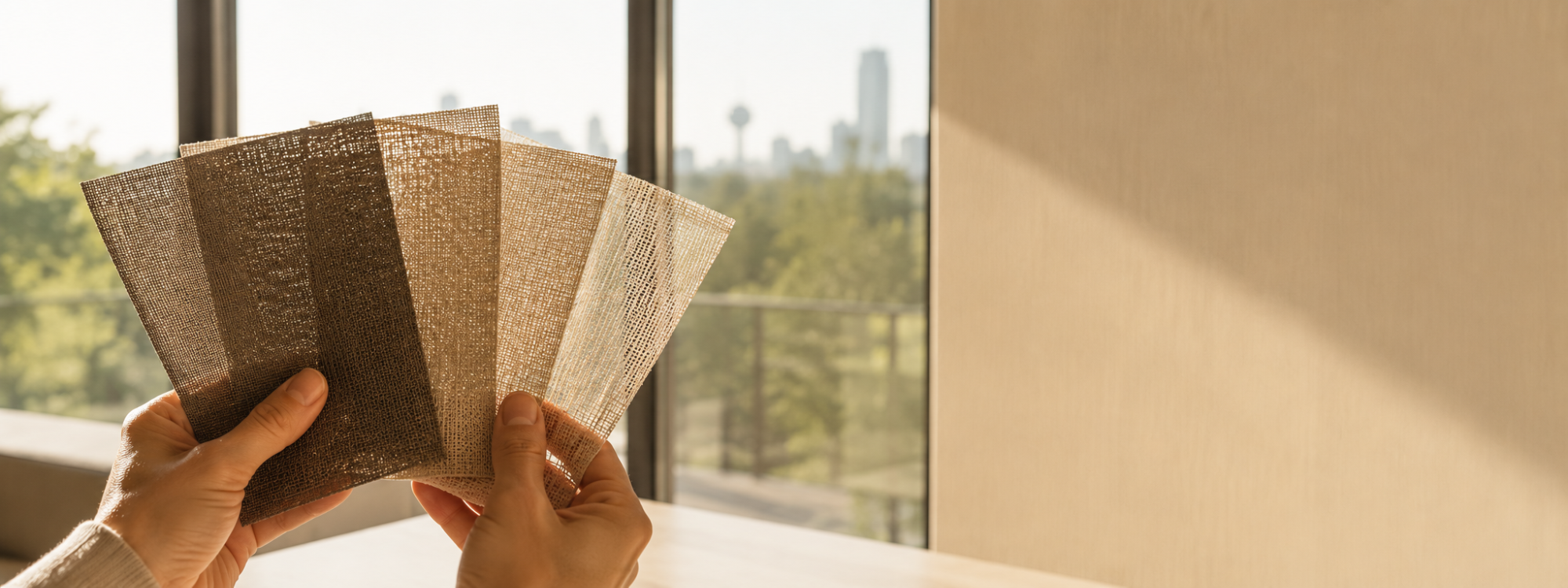
Every consultation I do, I bring the full openness range and we hold them up to your actual windows, in your actual light, facing your actual view. People change their minds about half the time once they see it, usually going a step darker than they expected.
Free, in your home, across the Dallas and Fort Worth area. We’ll measure, show you the range, and leave you a written quote.
📞 (214) 631-9432 ·
Book Your Free Consultation →
Serving Dallas, Plano, Frisco, McKinney, Highland Park, University Park, Richardson, Irving, Fort Worth, Southlake, and surrounding North Texas communities.