Nine options, what each actually costs, and which ones make sense for a Dallas home.
Walk into a showroom and you’ll be shown forty fabric samples in the first ten minutes. It’s an efficient way to sell and a terrible way to decide.
There are really only about nine types of window blind. Once you know what each one does well and badly, choosing takes about five minutes per room.
First: Blinds or Shades?
The words get used interchangeably. They’re not the same thing, and the difference determines what you can do with the window.
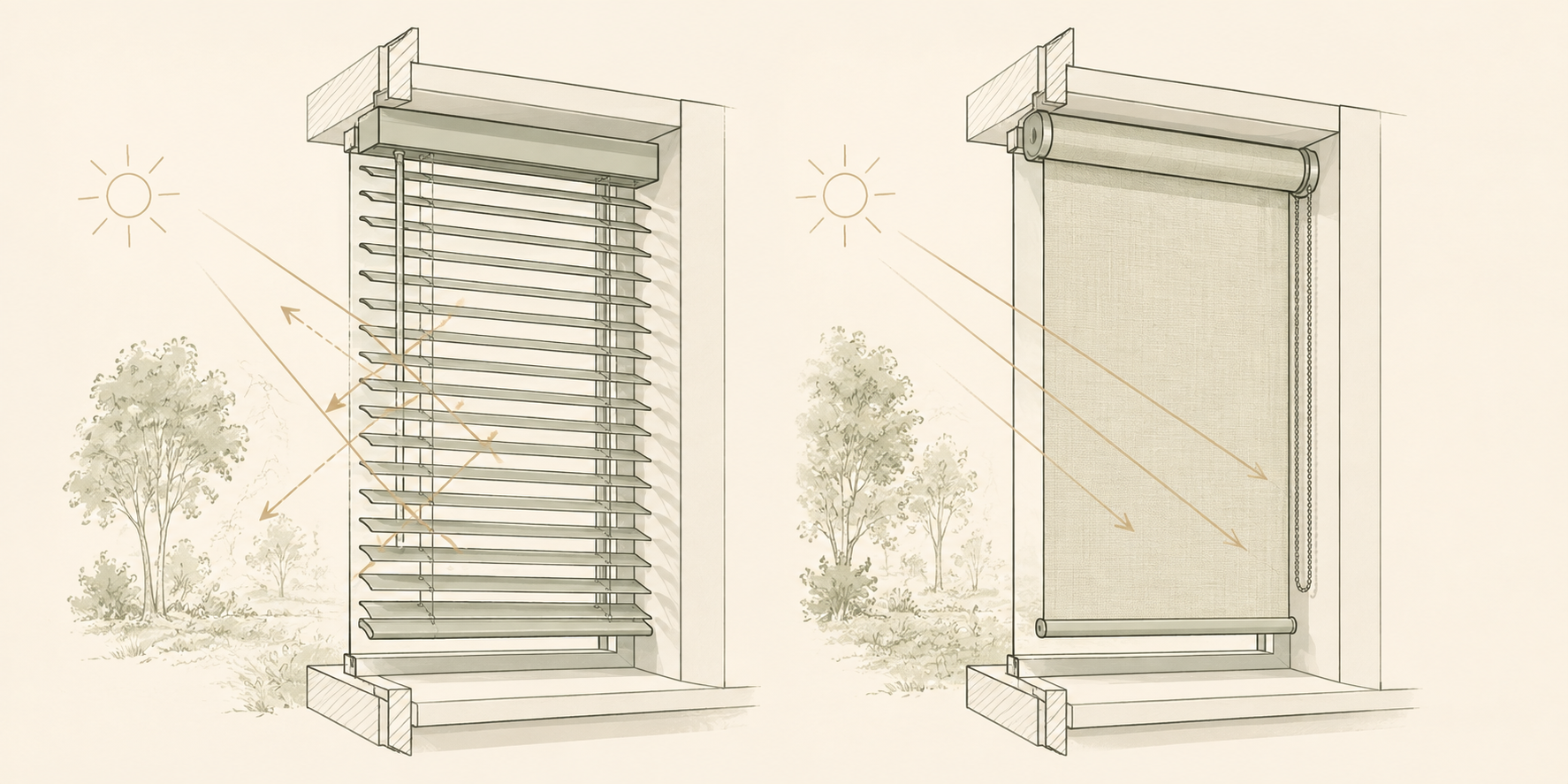
Blinds have slats. Individual vanes that tilt, letting you control the direction of light without moving the blind. You can have light and privacy simultaneously.
Shades are a single piece of material. Fabric or woven screen that rolls, folds, or stacks. No tilt — light control comes only from raising and lowering. In exchange, you get better insulation and a cleaner, softer look.
| Blinds | Shades | |
|---|---|---|
| Light control | Tilt + raise | Raise only |
| Privacy with light | Yes | No |
| Insulation | Poor to fair | Good to excellent |
| Look | Structured, architectural | Soft, minimal |
| Cleaning | Slat by slat | Wipe or vacuum |
| Typical cost | $60–$300 | $100–$450 |
“Blinds tilt. Shades don’t. That single difference decides most of what follows.”
The Nine Types
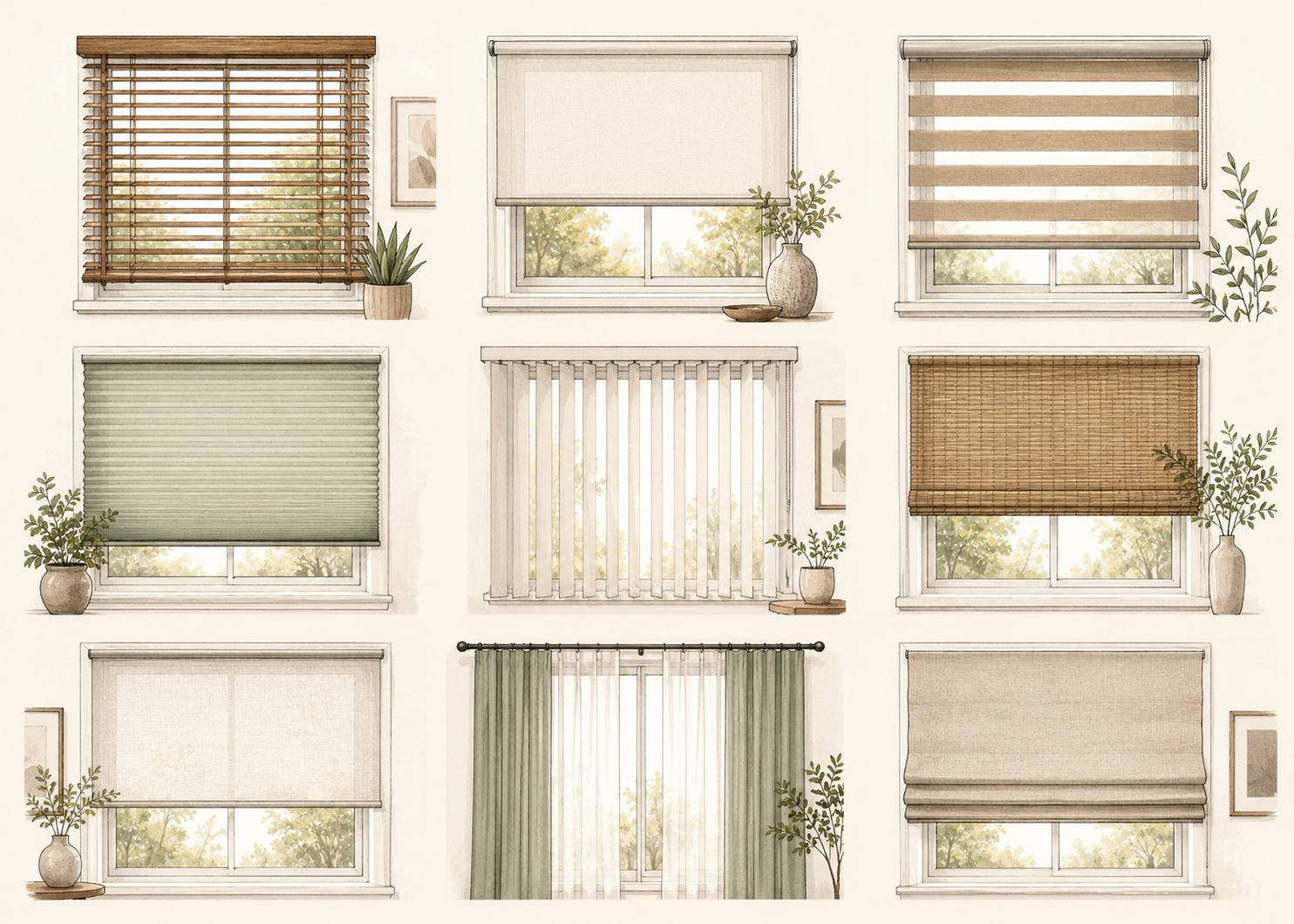
1. Faux Wood Blinds — $60–$180 per window
Composite slats with a wood-grain finish. The most-sold blind in Texas, and for good reason: they won’t warp in humidity, won’t fade in direct sun, and cost a fraction of real wood.
Heavier than real wood, so very wide windows may need a divider.
Best for: bathrooms, kitchens, west-facing windows, rentals, and anyone wanting the wood look without the price or the maintenance.
2. Real Wood Blinds — $120–$350 per window
Basswood or oak slats, stainable to match trim and cabinetry. Lighter than faux wood, so they span wider windows in a single unit, and they read as noticeably more premium in person.
They will warp in sustained humidity. Keep them out of bathrooms and laundry rooms.
Best for: formal living and dining rooms, studies, and homes with wood millwork to match.
3. Roller Shades — $90–$300 per window
A single fabric panel on a tube. Minimal, modern, and available in everything from sheer to full blackout. When raised they disappear almost entirely, which is why they suit contemporary interiors and windows with good trim.
Best for: modern homes, bedrooms in blackout fabric, and windows where you want the treatment to vanish.
4. Solar Shades — $120–$350 per window
Woven screen fabric that blocks UV and glare while staying transparent enough to see through. Rated by openness factor: 1% blocks the most and shows the least, 14% the reverse. For Dallas west-facing windows, 3–5% is the usual sweet spot.
Best for: any window with a view worth keeping, and the standard answer for glare on Texas afternoons.
5. Zebra / Dual Shades — $150–$400 per window
Alternating sheer and opaque horizontal bands on a single roller. Align the opaque bands and you get privacy; align the sheers and you get filtered light. One shade, two modes.
The trend product of the last few years, and genuinely useful — though the sheer bands offer little privacy after dark once interior lights are on.
Best for: living rooms and offices where light needs change through the day.
6. Cellular / Honeycomb Shades — $130–$400 per window
Pleated fabric forming hollow air chambers in cross-section. Those chambers insulate — the Department of Energy credits cellular shades with reducing solar heat gain by up to 60%.
The best-insulating option available, and the most effective single upgrade for a hot west-facing Texas room. Available single-cell, double-cell, and blackout.
Best for: bedrooms, west-facing rooms, and anywhere the cooling bill is the motivation.
7. Vertical Blinds & Panel Tracks — $100–$400 per opening
Vertical vanes or wide sliding fabric panels that stack to one side. The practical answer for sliding patio doors and very wide windows, where horizontal treatments become unwieldy.
Panel tracks are the modern version — wider panels, cleaner lines, none of the dated look older vertical blinds carry.
Best for: patio doors, sliding glass, and window walls.
8. Roman Shades — $180–$450 per window
Fabric that folds into soft horizontal pleats as it rises. The most decorative option here — closer to drapery than hardware, and the one that most changes how a room feels.
Fabric fades in direct Texas sun, so line them or keep them off west exposures.
Best for: formal rooms, bedrooms, and spaces where softness matters more than function.
9. Aluminum / Mini Blinds — $25–$90 per window
Thin metal slats. Inexpensive, functional, and what you’ll find in most apartments. They dent, they clatter, and they conduct heat rather than blocking it.
Best for: rentals, garages, utility spaces, and tight budgets.
What They Cost Per Window
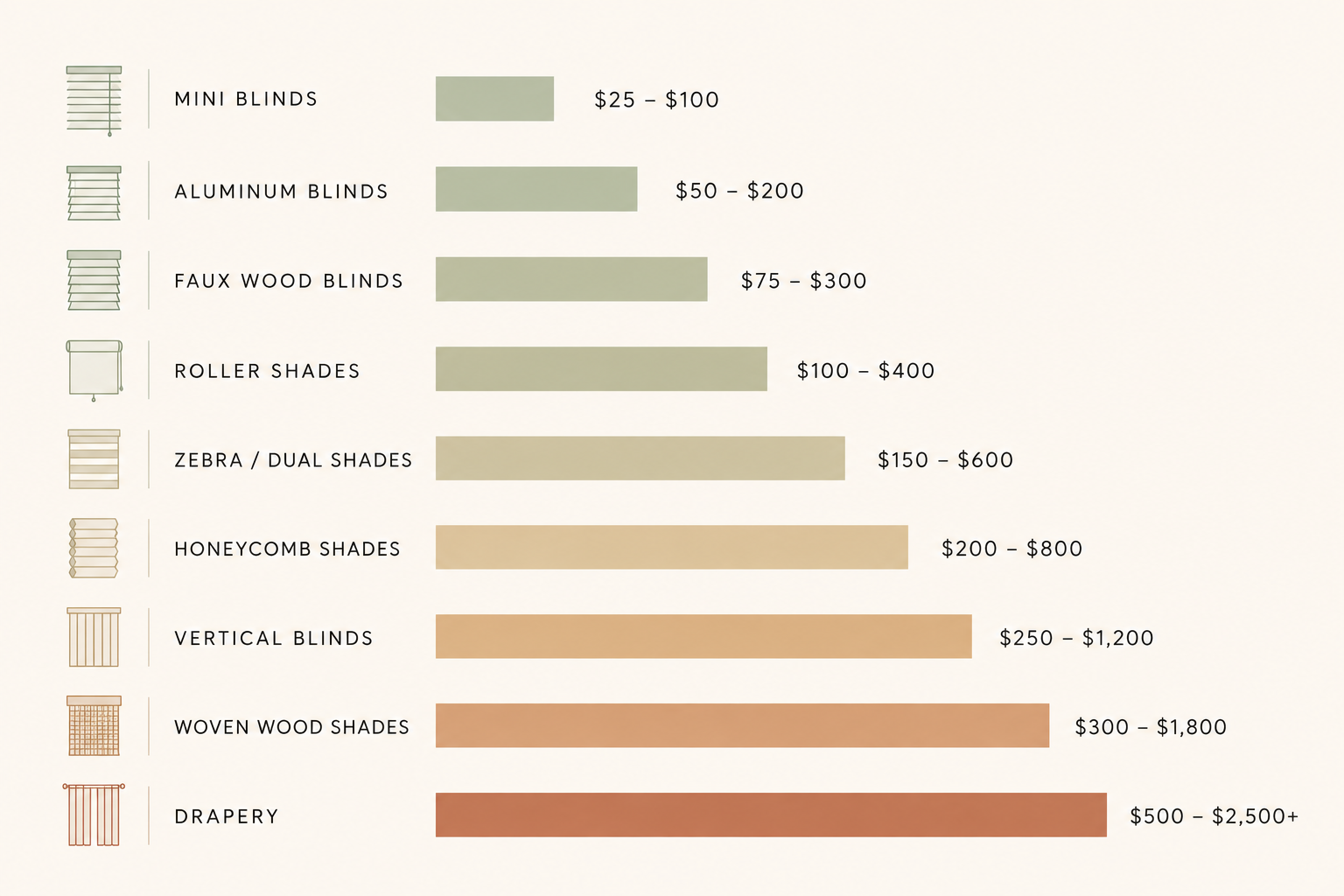
| Type | Range | Whole Home (20 windows) |
|---|---|---|
| Aluminum / mini | $25–$90 | $500 – $1,800 |
| Faux wood | $60–$180 | $1,200 – $3,600 |
| Roller | $90–$300 | $1,800 – $6,000 |
| Vertical / panel track | $100–$400 | Varies by opening |
| Real wood | $120–$350 | $2,400 – $7,000 |
| Solar | $120–$350 | $2,400 – $7,000 |
| Cellular | $130–$400 | $2,600 – $8,000 |
| Zebra / dual | $150–$400 | $3,000 – $8,000 |
| Roman | $180–$450 | $3,600 – $9,000 |
Installed, custom-measured, Dallas–Fort Worth market. Motorization adds $200–$400 per window.
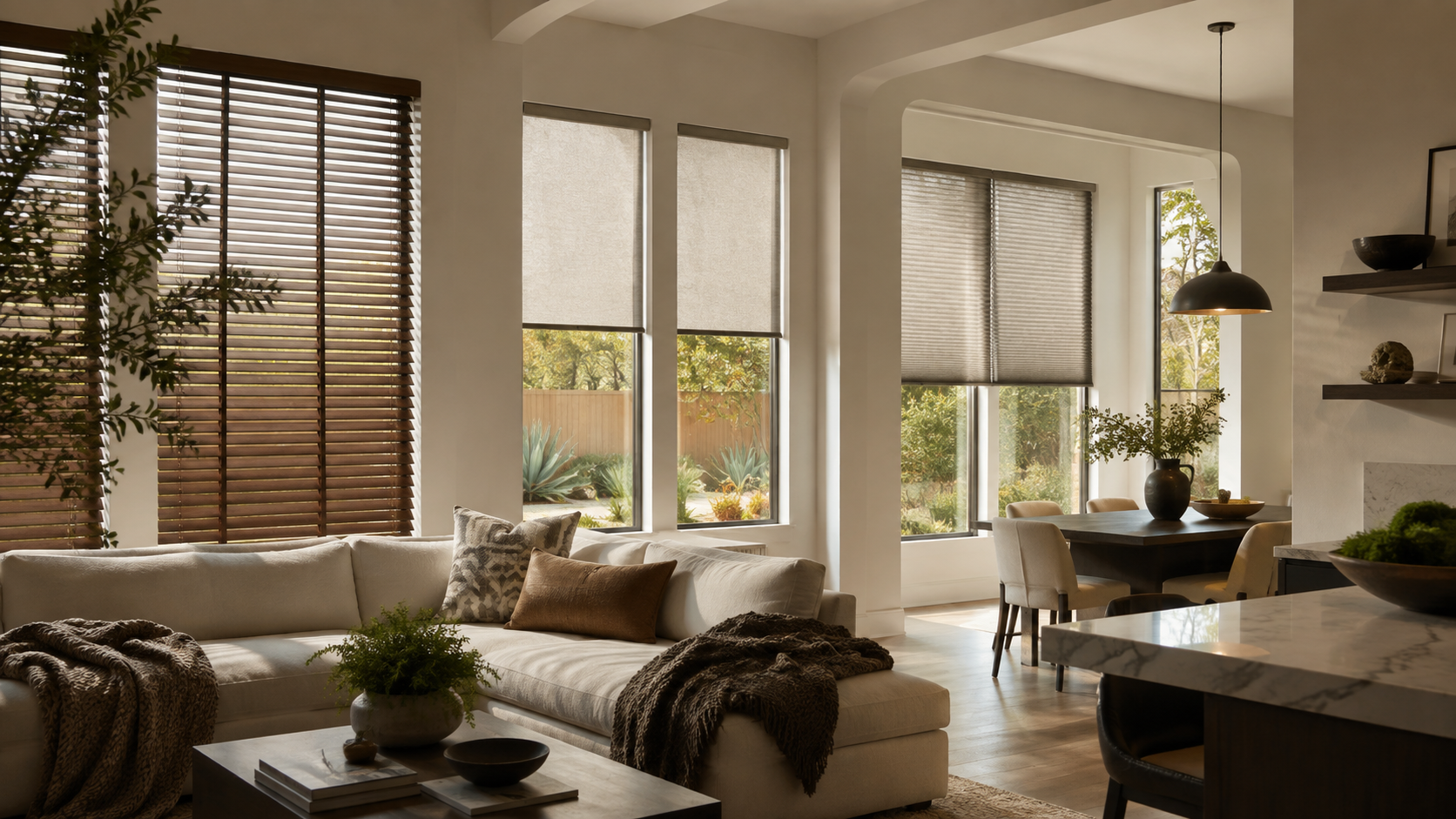
Most DFW homes end up mixing types — faux wood in the bathrooms, cellular in the bedrooms, solar shades in the living room. That’s normal and usually the right answer. Matching every window in the house is a showroom idea, not a practical one.
Custom vs. Store-Bought
Big-box blinds come in fixed widths. Your windows don’t.
The gap between a 34.5″ window and the nearest 34″ or 36″ stock blind shows up as a light gap down the side — which also means a heat gap, and in a Texas summer that matters. Custom blinds are built to your opening, usually within an eighth of an inch.
The other difference is lifespan. Stock blinds typically last 3–7 years before mechanisms fail or slats yellow. Custom runs 10–20. Over 20 years, replacing cheap blinds three times generally costs more than buying a custom once.
Where store-bought genuinely makes sense: rentals, temporary situations, garages, and rooms you’re planning to renovate.
“A half-inch gap at the edge of a stock blind is a light gap, a privacy gap, and — in August in Texas — a heat gap.”
Choosing Room by Room in Dallas
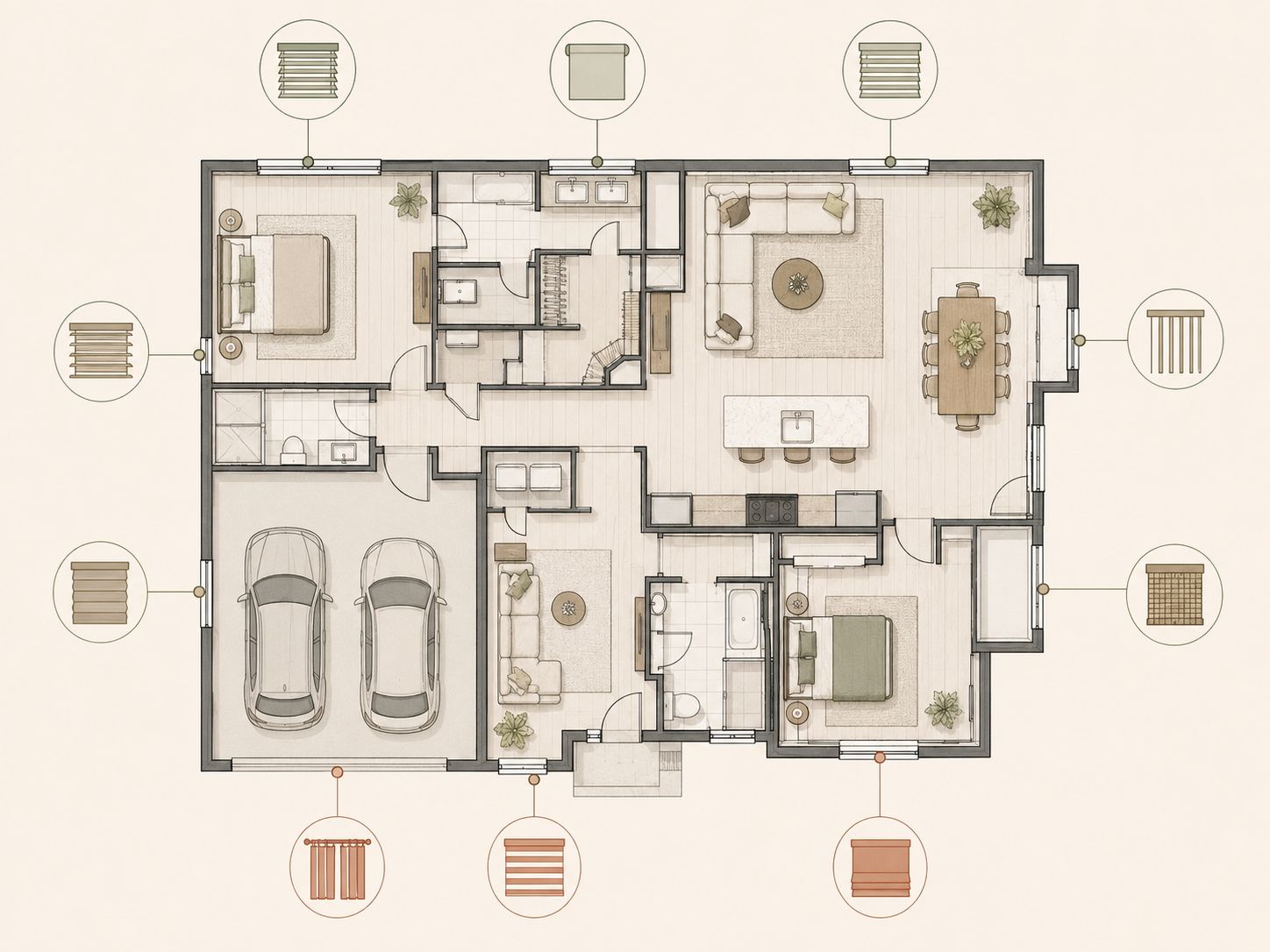
West-facing living rooms — solar shades at 3–5%, or cellular. This is where DFW afternoon heat does its damage.
Bedrooms — blackout cellular or blackout roller. Insulation plus darkness.
Bathrooms — faux wood or composite. Never real wood.
Kitchens — faux wood or roller in a wipeable fabric. Grease and steam rule out delicate fabrics.
Patio doors — vertical blinds or panel track. Nothing else handles the width well.
Home offices — solar shades to cut screen glare, or zebra shades for flexibility through the day.
Formal dining — real wood blinds, roman shades, or shutters. Appearance leads here.
High and hard-to-reach windows — whichever type suits, motorized. You will not adjust it otherwise.
Frequently Asked Questions
Blinds have individual slats that tilt, so you can control light direction while staying private. Shades are one continuous piece of material that only raises and lowers, but insulate better and look softer.
It depends on exposure. Cellular shades for hot west-facing rooms, solar shades where you want to keep the view, faux wood for humid rooms and general use. Most homes use a mix.
Roughly $25 for basic aluminum up to $450 for custom roman shades, installed, in the Dallas–Fort Worth market. Faux wood — the most common choice — typically runs $60–$180 per window.
For a home you’re staying in, generally yes. Custom blinds fit the opening exactly, eliminating light and heat gaps, and last two to three times longer. For rentals or short-term situations, stock blinds are fine.
No. Matching within sight lines — an open-plan living and dining area, for instance — looks intentional. Different rooms with different needs should have different treatments.
Roller and solar shades wipe down in one pass. Faux wood is easy but slat by slat. Cellular shades need vacuuming with a brush attachment. Roman shades are the most difficult.
Not Sure Which One Your Room Needs?
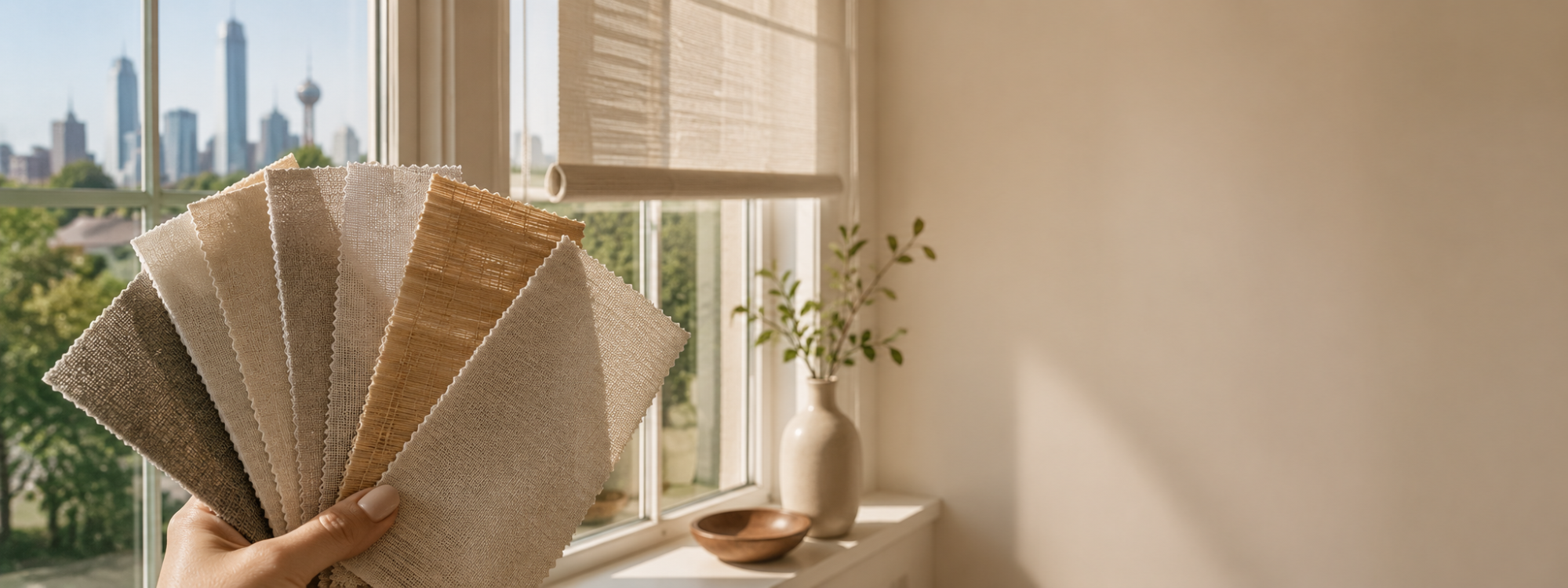
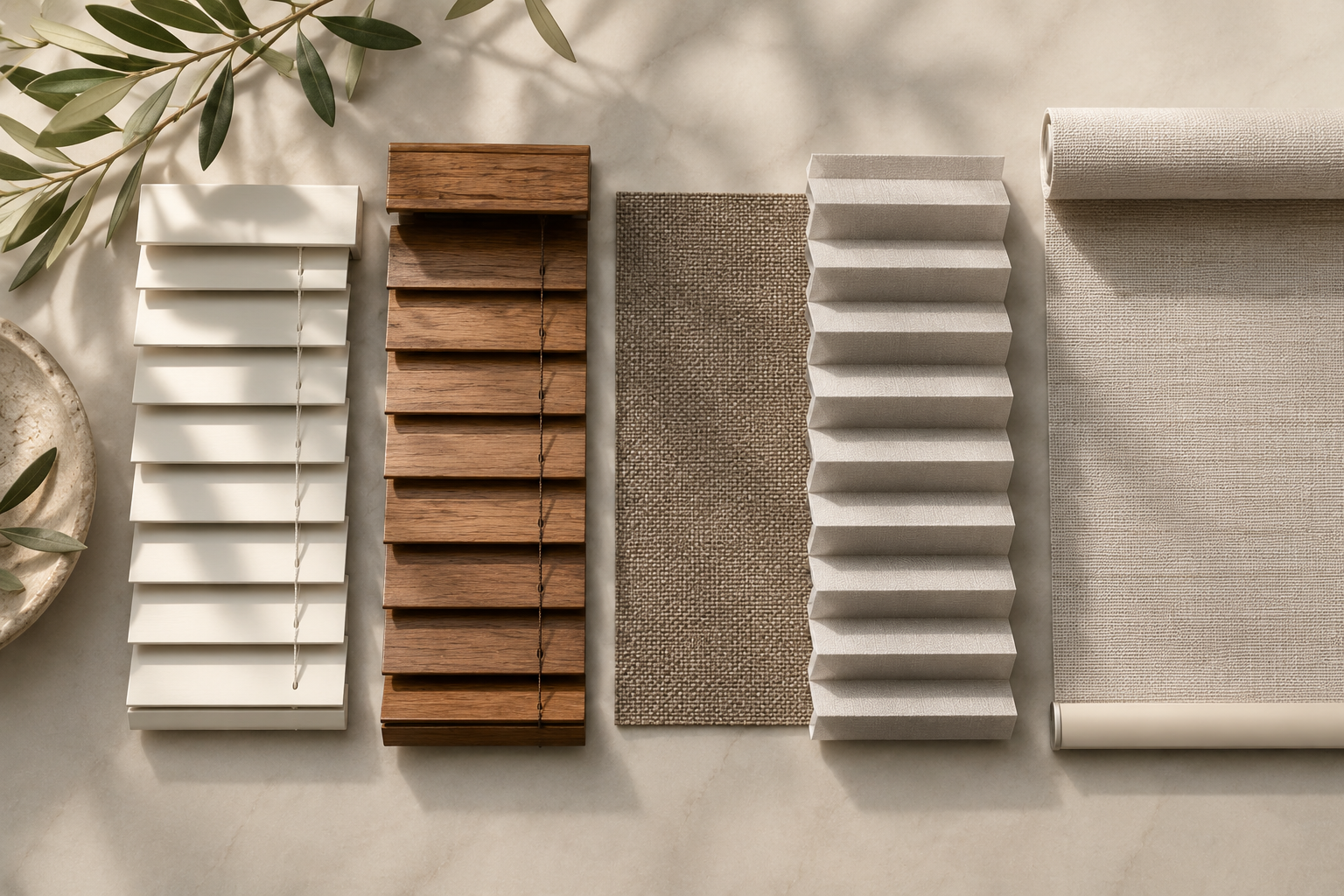
Nine options is a lot to weigh from a screen. Fabric behaves differently in your own light, and the right choice usually becomes obvious the moment you hold two samples up to the actual window.
Arcadia Blinds brings the full range to your home, free. We measure every opening, show you how each type performs in your rooms and your light, and give you an itemized written quote. No pressure to decide on the spot.
📞 (214) 631-9432 ·
Book Your Free In-Home Consultation →
Serving Dallas, Plano, Frisco, McKinney, Highland Park, University Park, Richardson, Irving, Fort Worth, Southlake, and surrounding North Texas communities.