What actually blocks a 105° August afternoon in Dallas, according to how windows physically work.
Every Dallas homeowner learns the same thing by their second summer: there’s a room in the house you stop using in August.
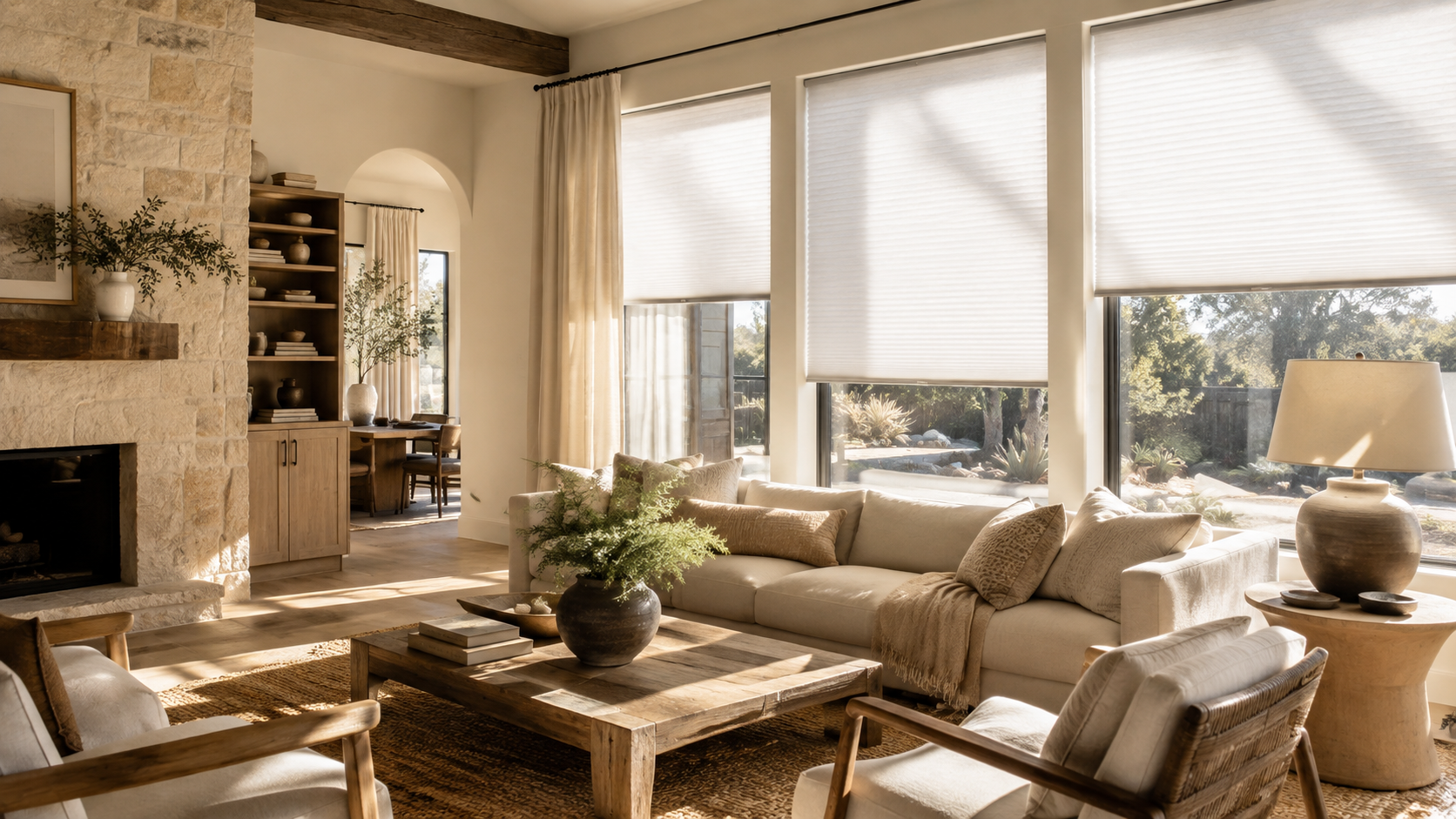
Usually it faces west. By four in the afternoon it’s ten degrees warmer than the rest of the house, the AC runs constantly and loses anyway, and the furniture nearest the window has started to fade.
Window treatments won’t fix a badly insulated house. But on that particular room, the right ones make a genuinely measurable difference — and the wrong ones do almost nothing while looking like they should.
Why Windows Are the Problem
The U.S. Department of Energy estimates that about 76% of the sunlight hitting a standard double-pane window becomes heat inside the room, and that heat gain and loss through windows accounts for 25–30% of residential heating and cooling energy use.
In North Texas that skews further. A DFW summer delivers months of direct high-angle sun, and surface temperatures on west-facing glass routinely exceed 140°F.
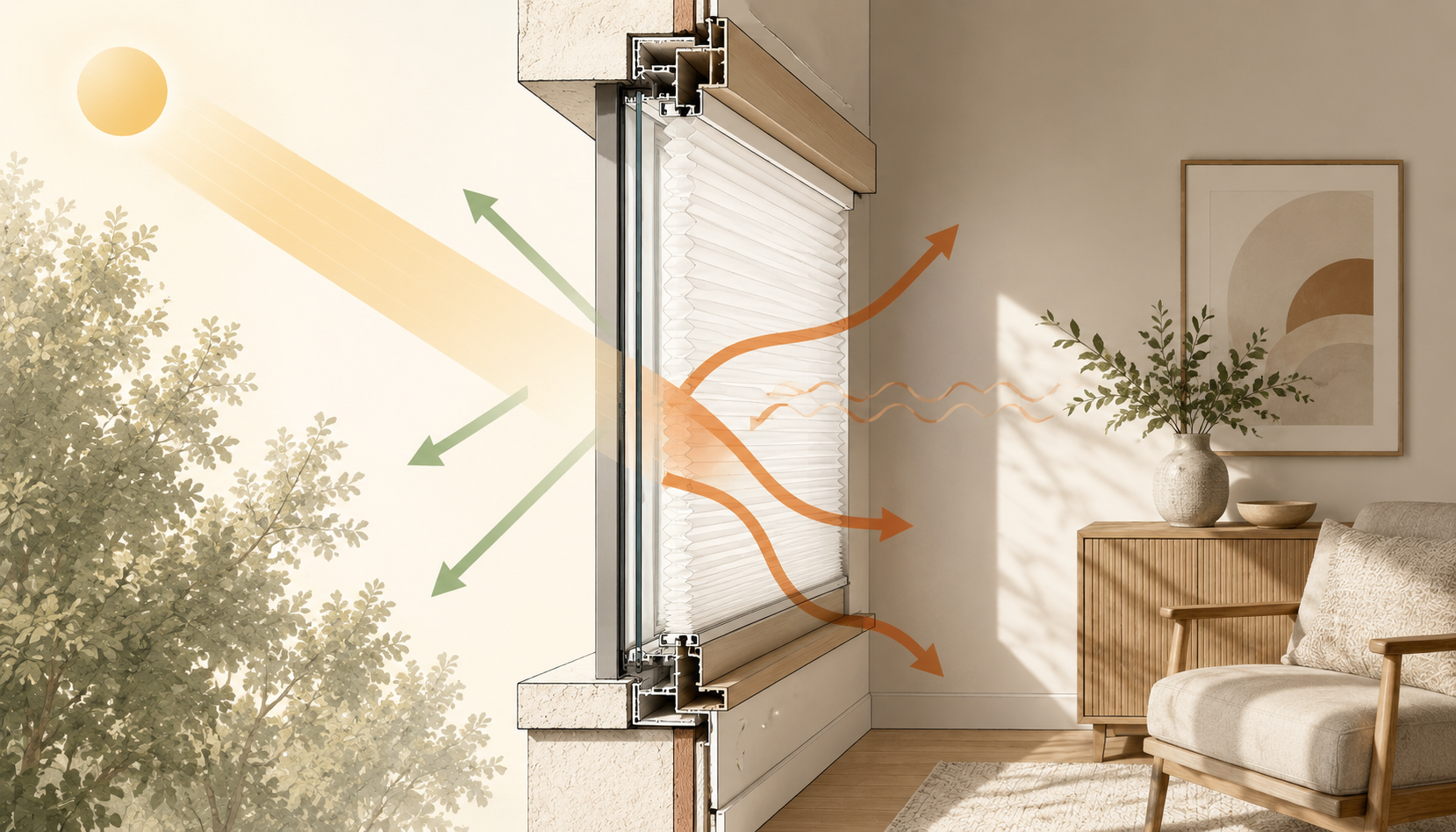
The important part: once sunlight has passed through the glass, it’s already heat. A treatment mounted inside can reflect some of it back and slow the rest from spreading — but it’s working after the fact. That’s why what the treatment is made of matters far more than how thick or dark it looks.
“Dark and heavy doesn’t mean cool. A black blackout blind absorbs sun and re-radiates it into the room as heat.”
What Actually Works, Ranked
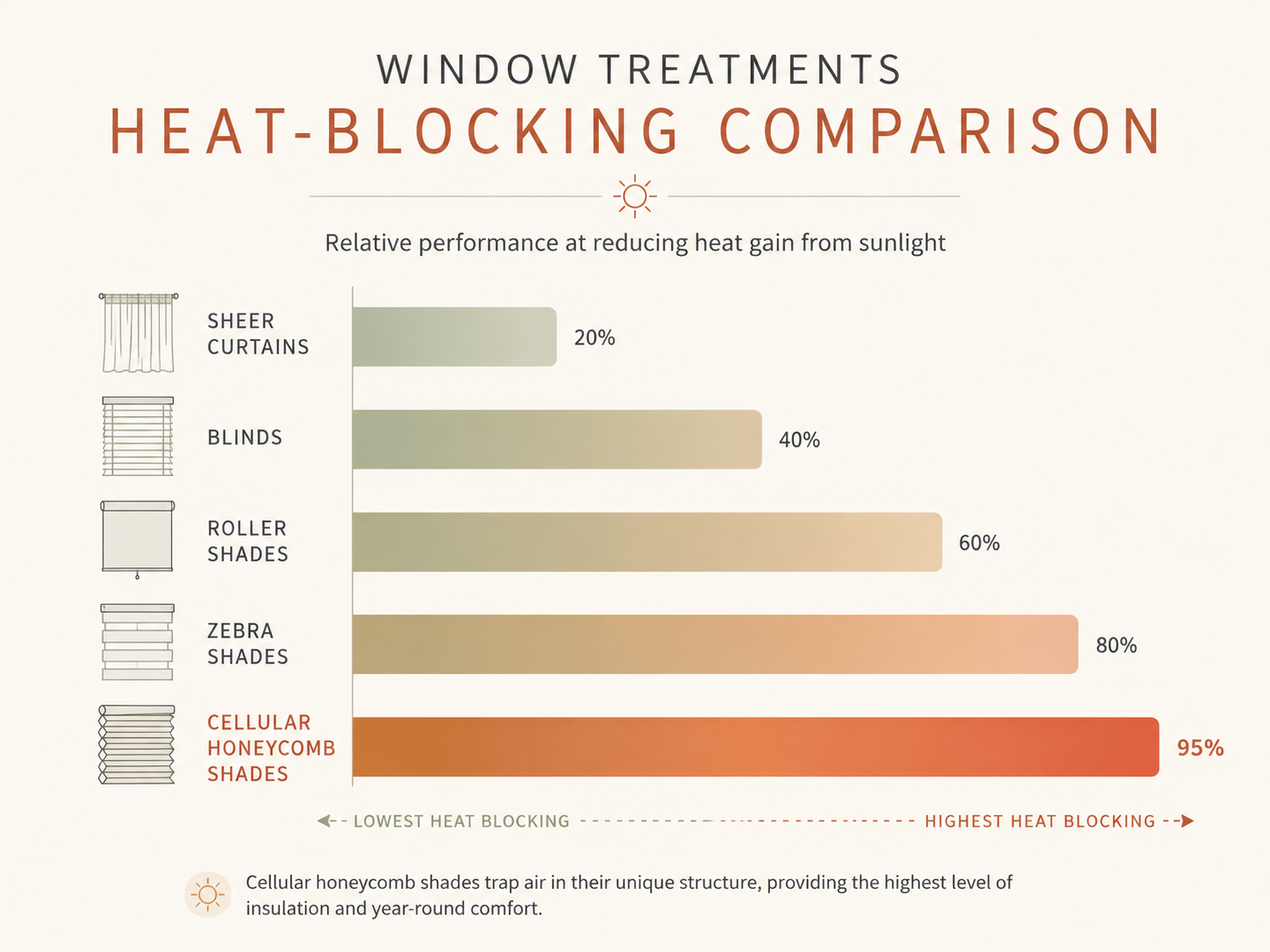
1. Cellular (Honeycomb) Shades — Best Insulator
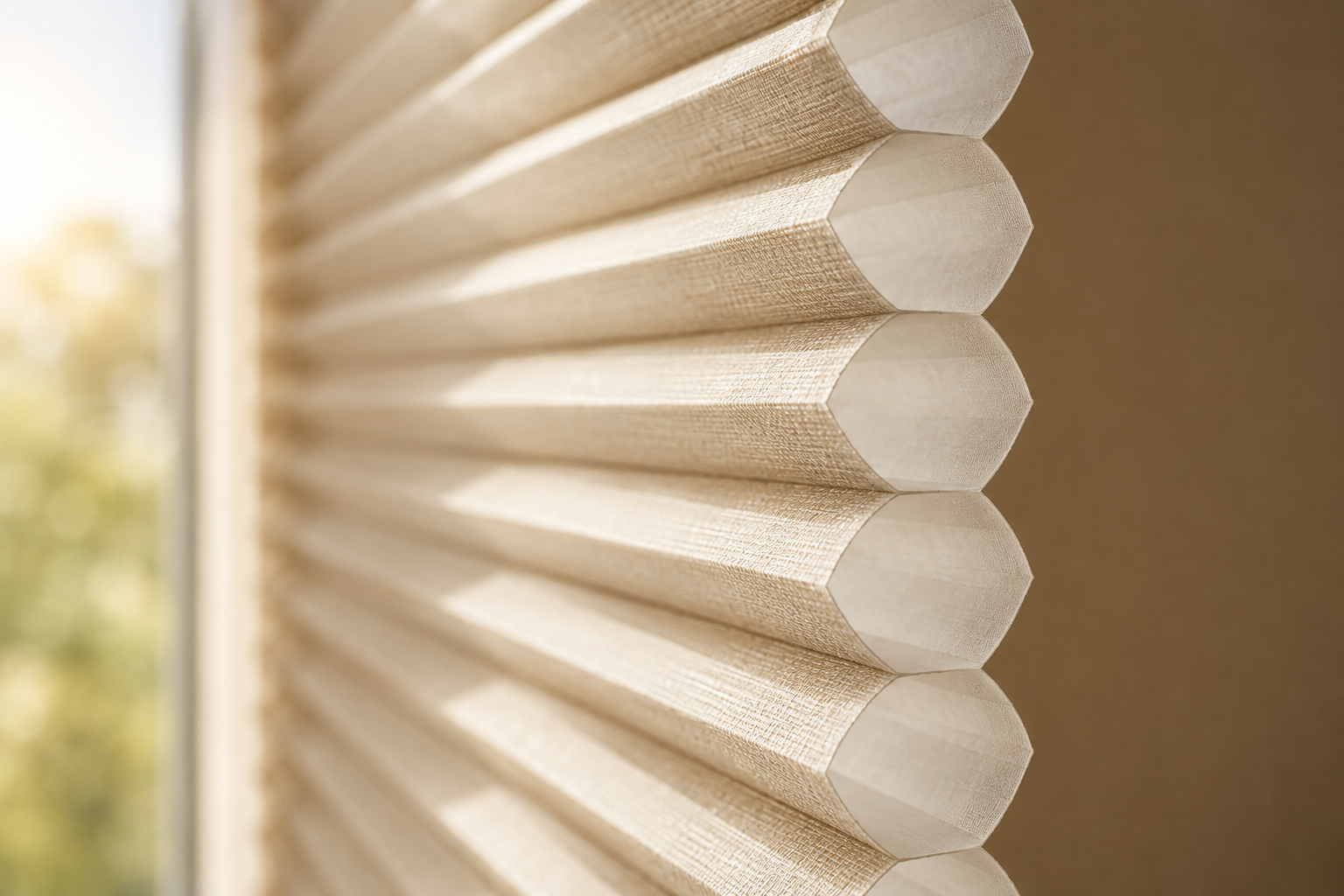
Cellular shades are built from pleated fabric forming hollow honeycomb chambers in cross-section. Those chambers trap air, and trapped air is an insulator — the same principle as a double-pane window or a puffer jacket.
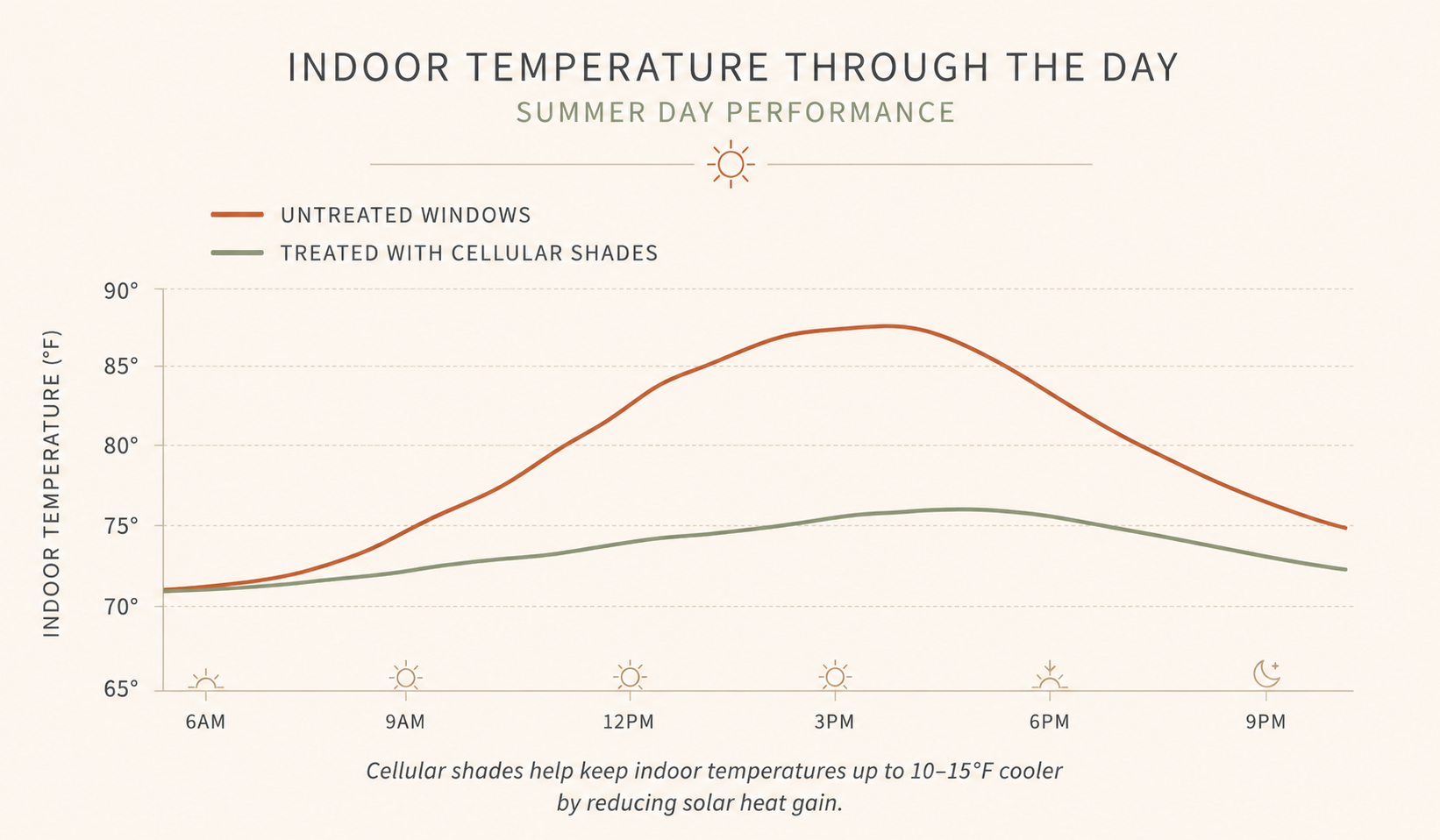
The Department of Energy reports cellular shades can reduce solar heat gain by up to 60% when properly installed, with the best-performing designs reaching higher.
- Single cell — good insulation, slimmer stack
- Double cell — better insulation, more depth
- Blackout cellular — insulation plus full light block
Mounting matters enormously. An inside mount with tight side channels dramatically outperforms a loosely fitted shade, because the failure mode is air leaking around the edges rather than through the fabric. A well-fitted cheap cellular shade beats a poorly fitted expensive one.
Best for: bedrooms, west-facing rooms, and anywhere you want maximum insulation.
2. Roller Shades — Best for Keeping the View
Roller shades are woven screen fabric that blocks UV and glare while remaining transparent enough to see through. You keep the view and lose the punishment.
Performance is set by openness factor — the percentage of open weave:
| Openness | Blocks | View | Best For |
|---|---|---|---|
| 1% | ~99% of UV | Minimal | Harsh west windows, media rooms |
| 3% | ~97% | Limited | Strong afternoon sun |
| 5% | ~95% | Good | The DFW default — best balance |
| 10% | ~90% | Very good | East and north windows |
| 14% | ~86% | Excellent | Shaded or north-facing |
For most Dallas homes, 3% or 5% on west and south exposures is the right call. Fabric color matters too: dark fabrics preserve view clarity and cut glare better, light fabrics reflect more heat but produce more haze.
Best for: living rooms and any window with a view worth keeping.
3. Plantation Shutters — Best Durability
Closed shutter louvers create an insulating air pocket against the glass, and the solid panels block direct sun completely. They don’t match a double-cell shade for pure R-value, but they last 20+ years, never fade, and let you redirect light rather than only block it.
Best for: long-term whole-home solutions and windows where the treatment is permanently visible from the street.
4. Faux Wood and Aluminum Blinds — Adjustable, Not Insulating
Horizontal blinds control direction well and insulate poorly. There’s no air chamber and no seal, and the slats simply redirect light.
That said, direction control is worth more than most people realize — see the louver section below.
Best for: rooms where flexibility beats insulation, and budget-conscious projects.
5. Blackout Curtains — Overrated for Heat
The one to be careful with.
Blackout curtains block light excellently. They block heat moderately at best, and dark ones can make things worse: the fabric absorbs solar energy, heats up, and re-radiates that heat into the room. A hot black curtain is a radiator hanging in your window.
They help meaningfully only when sealed at the top and sides so hot air can’t circulate around them — which most installations aren’t.
Best for: light control and sleep. Pair with a cellular shade if heat is the actual problem.
The Louver Trick Most People Get Backwards
If you have horizontal blinds or shutters, which direction you tilt the slats changes the result — and most people do it the less effective way.
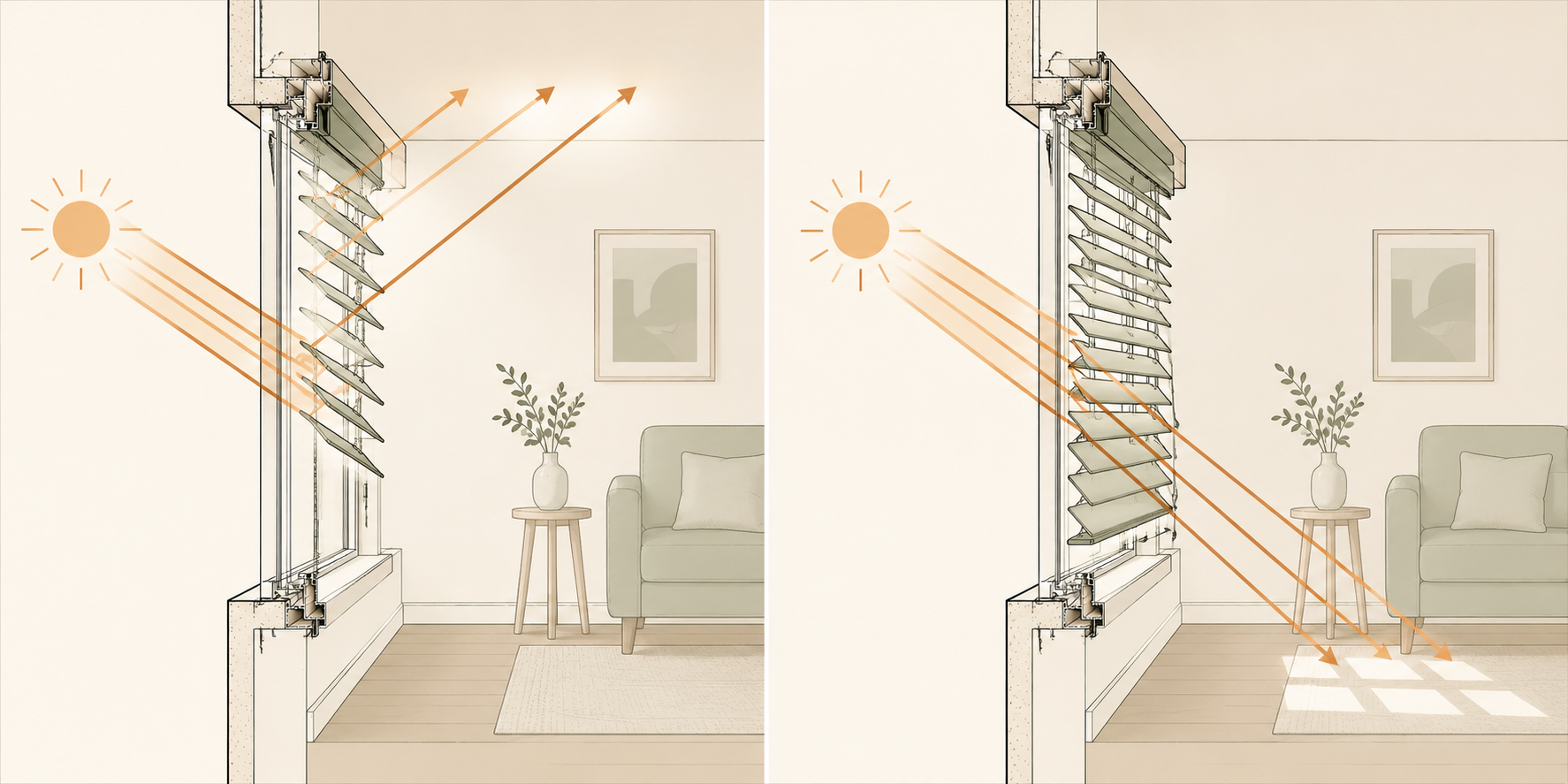
Tilt the louvers UP — concave side facing up, so slats angle toward the ceiling.
This deflects incoming sunlight upward onto the ceiling, where it diffuses as soft indirect light. The room stays bright, but direct sun never lands on your floor, furniture, or skin.
Tilt DOWN and you direct sunlight straight onto the floor and furnishings — more glare, more fade, more absorbed heat.
Same blind, same position, meaningfully different room. It costs nothing to change.
“Tilt your louvers up, not down. It bounces the sun onto the ceiling instead of your sofa — same blind, cooler room, free.”
A Room-by-Room Strategy for DFW Homes
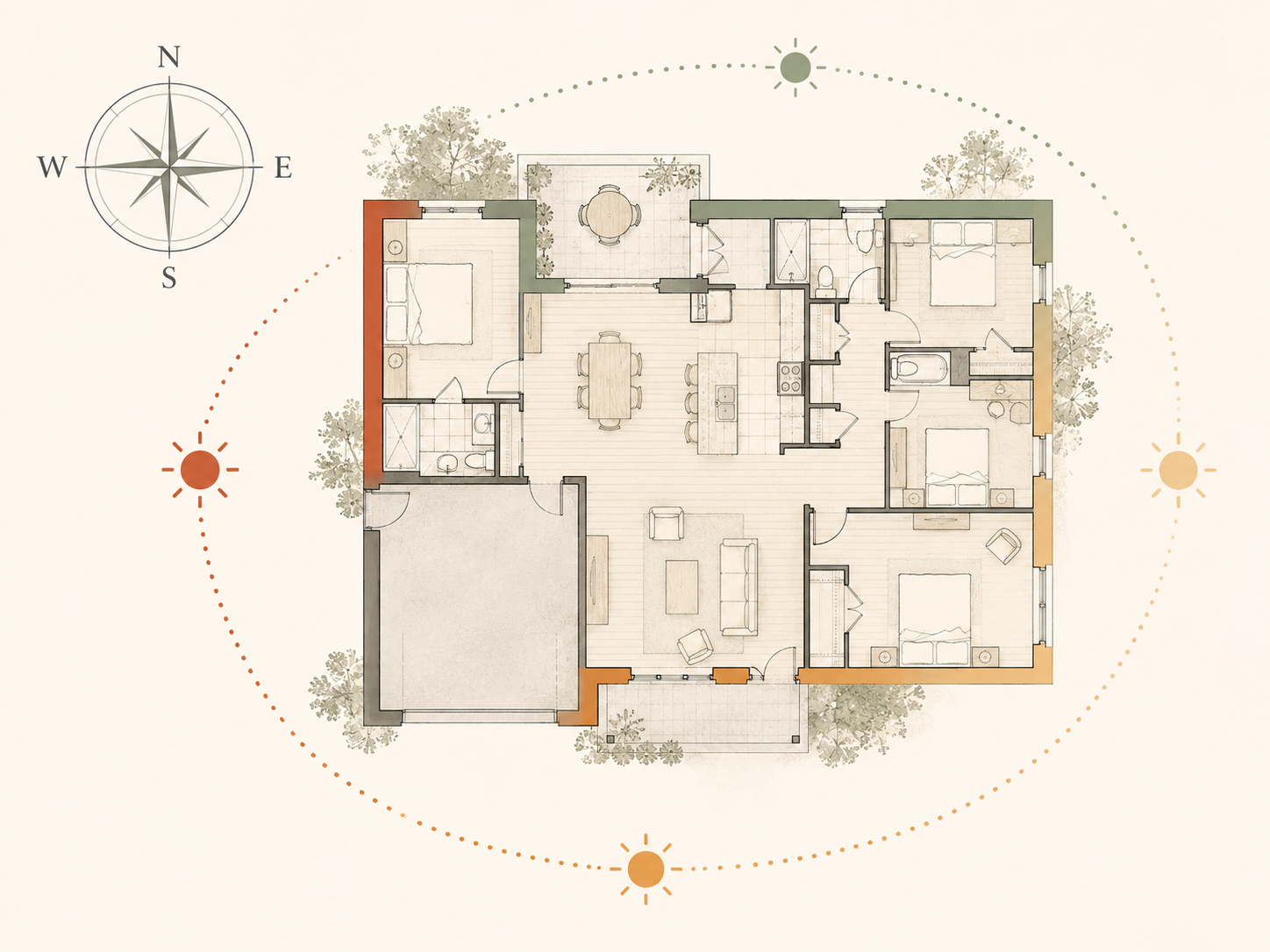
Orientation should drive every decision. In Dallas:
West-facing — the hardest exposure in Texas. Punishing sun from 2 p.m. through sunset, exactly when outdoor temperatures peak. Use double-cell cellular shades or 1–3% solar shades. Motorized with a scheduled close before 2 p.m. is the strongest version of this.
South-facing — sustained sun most of the day at a higher angle. Solar shades at 3–5%, or shutters. Exterior overhangs help significantly here in a way they don’t on west windows.
East-facing — bright mornings, cooler afternoons. 5–10% solar shades are usually enough. Blackout only if it’s a bedroom.
North-facing — the easy one. Minimal direct sun. Prioritize privacy and appearance; 10–14% solar shades or anything decorative works.
Bathrooms and kitchens — humidity plus heat. Composite shutters or faux wood, never real wood or delicate fabric.
What You’ll Realistically Save
Honest expectations matter more than a big number.
Window treatments alone won’t transform your electric bill. What they reliably do:
- Reduce the load on your AC during peak afternoon hours, when electricity is most expensive
- Eliminate hot spots — that unusable west room becomes usable again
- Prevent UV fade on flooring, artwork, and upholstery
- Improve comfort near windows, which is what people actually notice day to day
The Department of Energy’s figures on cellular shades suggest a meaningful reduction in solar heat gain, and in a DFW summer that translates to real cooling savings on high-exposure windows. But the effect is concentrated: treating the west-facing wall of a Dallas home returns far more than treating twenty windows evenly.
If budget is limited, treat by exposure, not by room.
Frequently Asked Questions
Yes, though how much depends entirely on type. Cellular shades trap air and reduce solar heat gain substantially — the DOE cites up to 60%. Standard horizontal blinds block direct sun but insulate very little. Any interior treatment works after sunlight has already passed the glass, so material and fit matter more than thickness.
Double-cell cellular shades for maximum insulation, or low-openness solar shades (1–5%) if you want to keep the view. On west-facing Texas windows, either is a large improvement over bare glass or standard blinds.
Only partially. They block light very well, but dark fabrics absorb solar energy and radiate it back into the room. They perform much better when sealed at the top and sides, or paired with a cellular shade behind them.
Tilt the slats upward, so light deflects toward the ceiling rather than onto the floor. This reduces glare and direct heat while keeping the room bright.
On west- and south-facing windows, yes. They’re the most effective insulating interior treatment available and the difference is noticeable in a DFW summer. On north-facing windows the benefit is much smaller.
No. Prioritize by exposure. West-facing windows deliver the largest return by a wide margin, followed by south. North-facing windows are largely an aesthetic decision.
Find Out Which Windows Are Costing You
Every home has one or two windows doing most of the damage. Usually you already know which ones — they’re in the room nobody sits in after three o’clock.
Arcadia Blinds will walk your home, check each window’s orientation and exposure, and tell you which ones are worth treating and which ones aren’t. Free, in-home, and with samples so you can see how each fabric handles your actual afternoon light.
📞 (214) 631-9432 ·
Book Your Free In-Home Consultation →
Serving Dallas, Plano, Frisco, McKinney, Highland Park, University Park, Richardson, Irving, Fort Worth, Southlake, and surrounding North Texas communities.